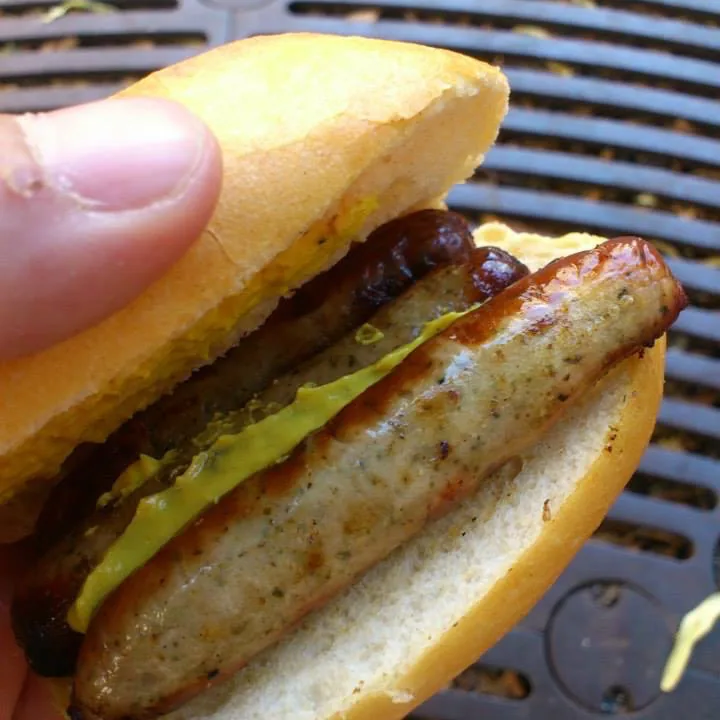
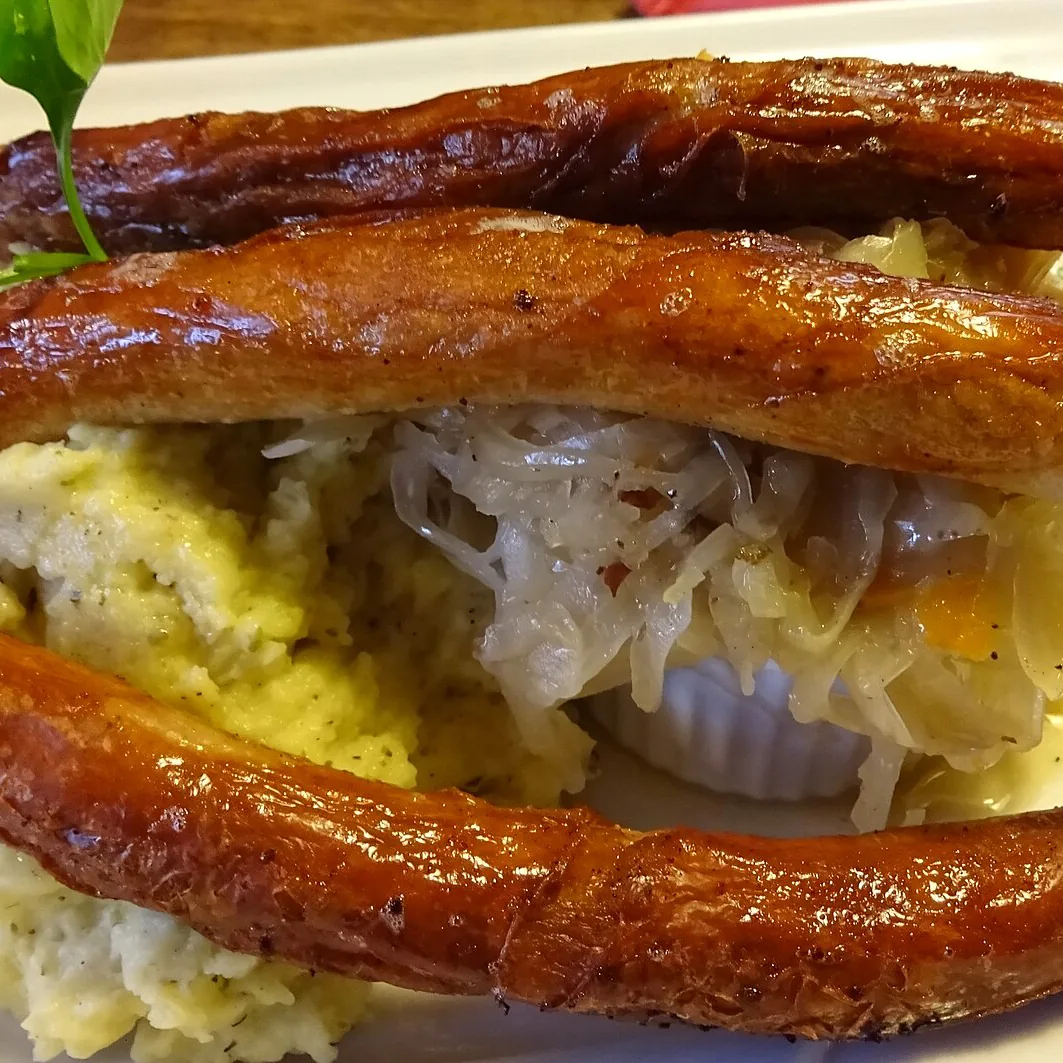
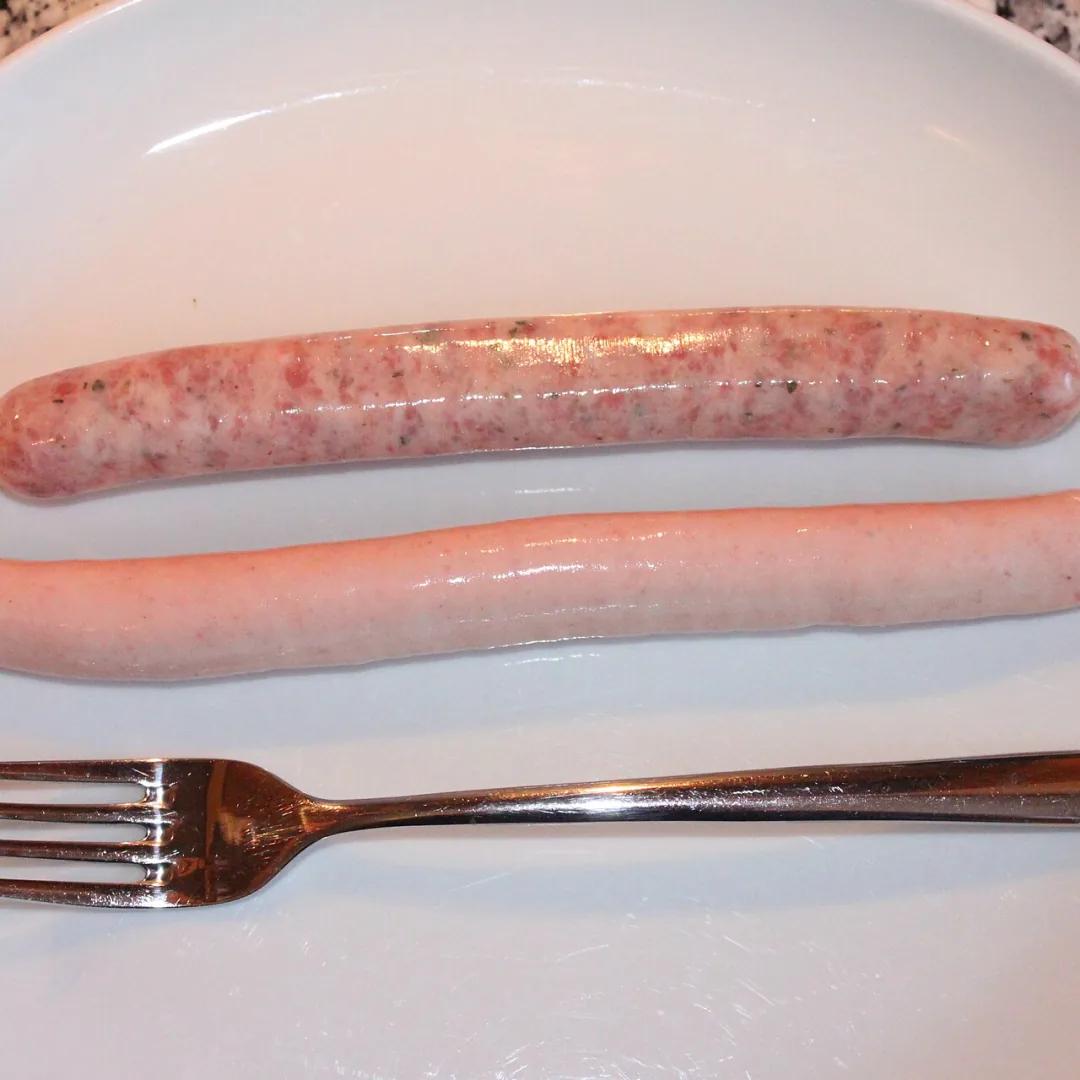
Franconian bratwursts vary strongly by region: the Nürnberger is small and marjoram-spiced, the Coburger is long and coarse, the Kulmbacher is tied to an aniseed Bratwurststollen, and the Würzburger is known as the Geknickte. For visitors, the key point is simple: there is no single Franconian bratwurst, but many local traditions.

When people say “bratwurst” in Franconia, they are rarely talking about one single sausage. In Nuremberg it is small, fine and marjoram-spiced. In Coburg it is long, coarse and traditionally grilled over pine cones. In Kulmbach it comes with a dedicated aniseed roll. In Würzburg it is bent into a Kipf. In many villages, it follows the recipe of one butcher family.
That is why Franconian bratwurst fits Find My Seidla so well. It follows the same logic as the beer: short distances, strong local identity, old craft and many regional versions that only really make sense when you eat them where they belong.
Franconian bratwurst at a glance
- Not one style: Franconia has many regional bratwurst traditions, not only the famous Nuremberg one.
- Key cities: Nuremberg, Coburg, Bamberg, Hof, Kulmbach, Bayreuth, Ansbach, Würzburg and Schweinfurt.
- Typical features: local butcher recipes, Bändel or Schleiß casing, marjoram, nutmeg, pepper, lemon, caraway or wine, depending on the region.
- With beer: Helles, Kellerbier, Rotbier, Märzen and sometimes Rauchbier, depending on the sausage and place.
- Important: The boundaries between varieties are fluid. Every good butcher has their own touch.
Why bratwurst matters in Franconia
In Franconia, bratwurst is everyday food and regional identity at the same time. It appears at Kirchweih festivals, Christmas markets, old-town stands, beer gardens, inns and sometimes right beside a brewery tap. Travel through the region and you quickly notice: bratwurst here is not just “sausage from the grill”. It is local.
The variety comes from Franconia’s historic patchwork of towns, prince-bishoprics, margraviates, free imperial cities, villages and butcher families. Add differences in religion, wealth, equipment and local food habits, and you get finer fillings, coarser fillings, different casings, different spices, different rolls and different rituals.
For visitors, the key point is simple: a Coburger is not a long Nürnberger. A Kulmbacher is not a Hofer. And “Franconian bratwurst” is more of a family name than one single product.
Two things to understand first
Bändel, Schleiß and the Franconian bite
Many Franconian bratwursts are traditionally filled into Bändel or Schleiß, a special fatty membrane around the pig’s intestine. It protects the sausage during grilling and helps create the crisp, juicy outside that makes good Franconian bratwurst so satisfying.
The terms and exact practice vary by region. For travellers, the useful point is this: when a bratwurst is made with Bändel or Schleiß, that is not a butcher’s technicality. It changes the bite.
Blaue Zipfel and Saure Zipfel
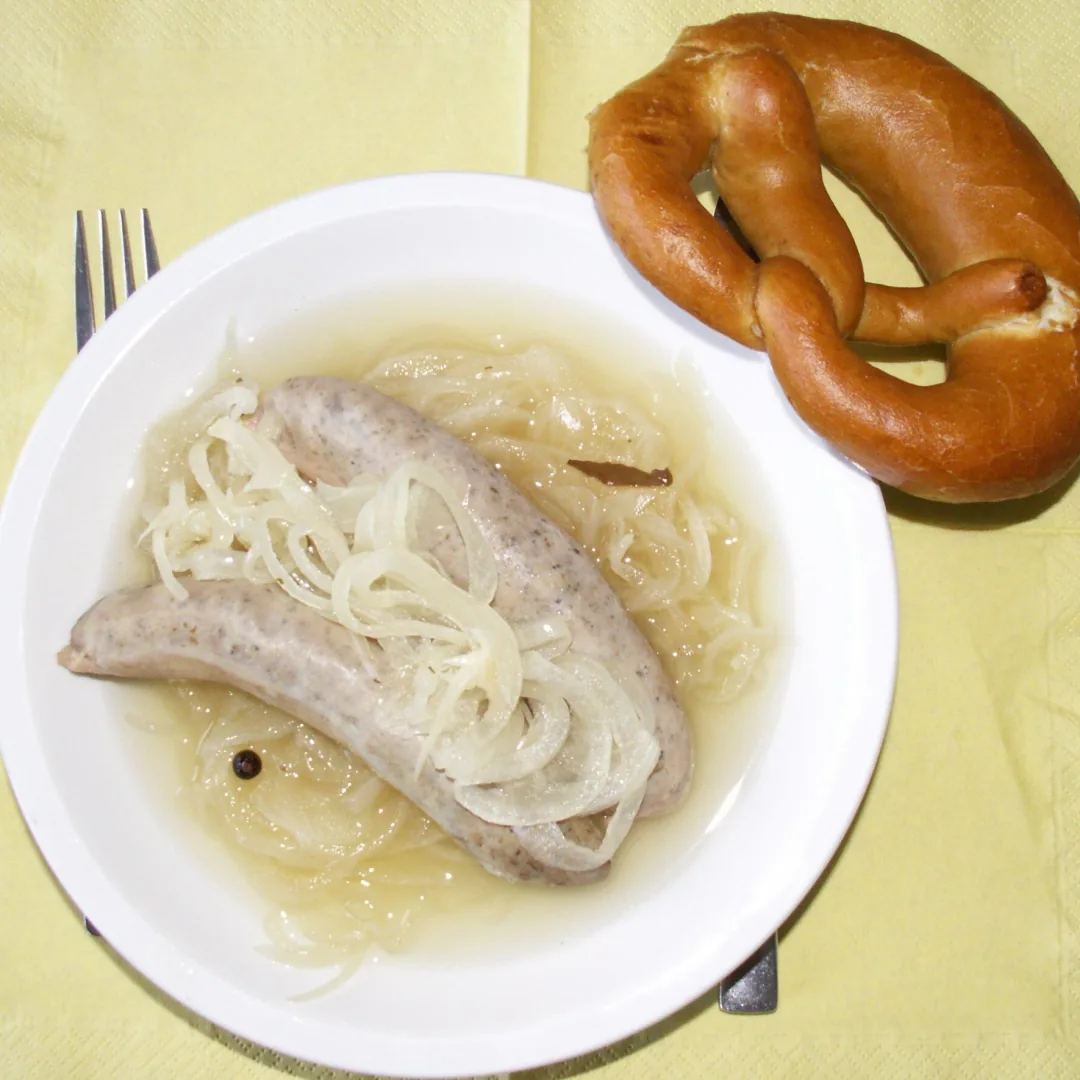
Blaue Zipfel are not a separate bratwurst variety, but a very Franconian way of preparing bratwurst. The sausages are gently cooked in a sweet-sour broth with vinegar or wine, onions, root vegetables and spices. They turn pale grey to slightly bluish, which explains the name.
At beer cellars and inns, Saure Zipfel are ideal when you want something regional but not necessarily grilled. Bread, pretzel, horseradish and a fresh Kellerbier are the classic direction.
The key Franconian bratwurst varieties
Nürnberger Rostbratwurst
The Nürnberger Rostbratwurst is the most famous Franconian bratwurst and has held EU Protected Geographical Indication status since 2003. It is small, usually 7 to 9 cm long, about 20 to 25 g in weight and seasoned with marjoram. It may only be produced within the city limits of Nuremberg.
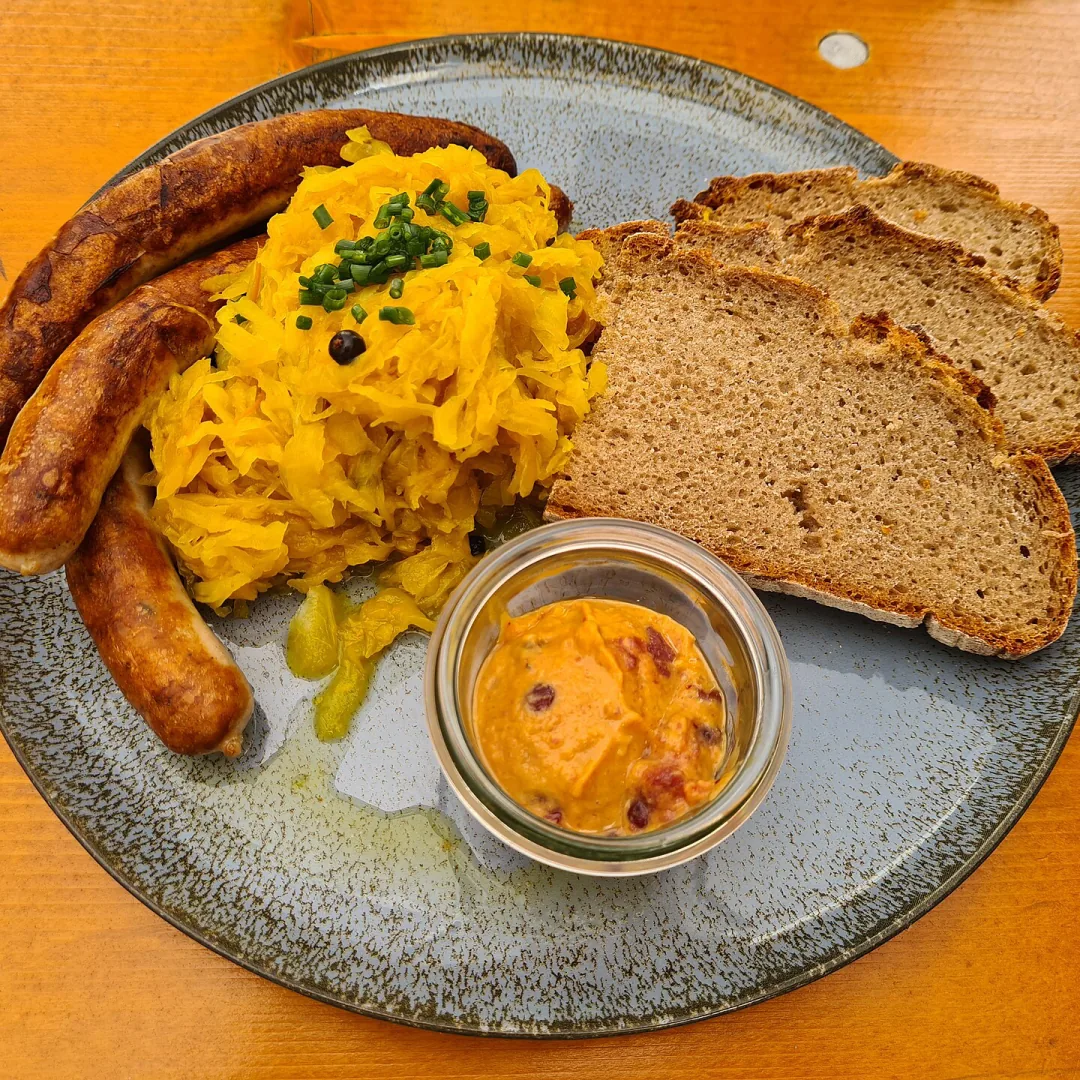
The classic order is Drei im Weggla: three small grilled sausages in a bread roll. In a tavern, they are served as six, eight, ten or twelve pieces, usually with sauerkraut, potato salad, horseradish and bread. A Nuremberg Rotbier is a particularly good match.
Nürnberger Rostbratwurst Guide →
Coburger bratwurst
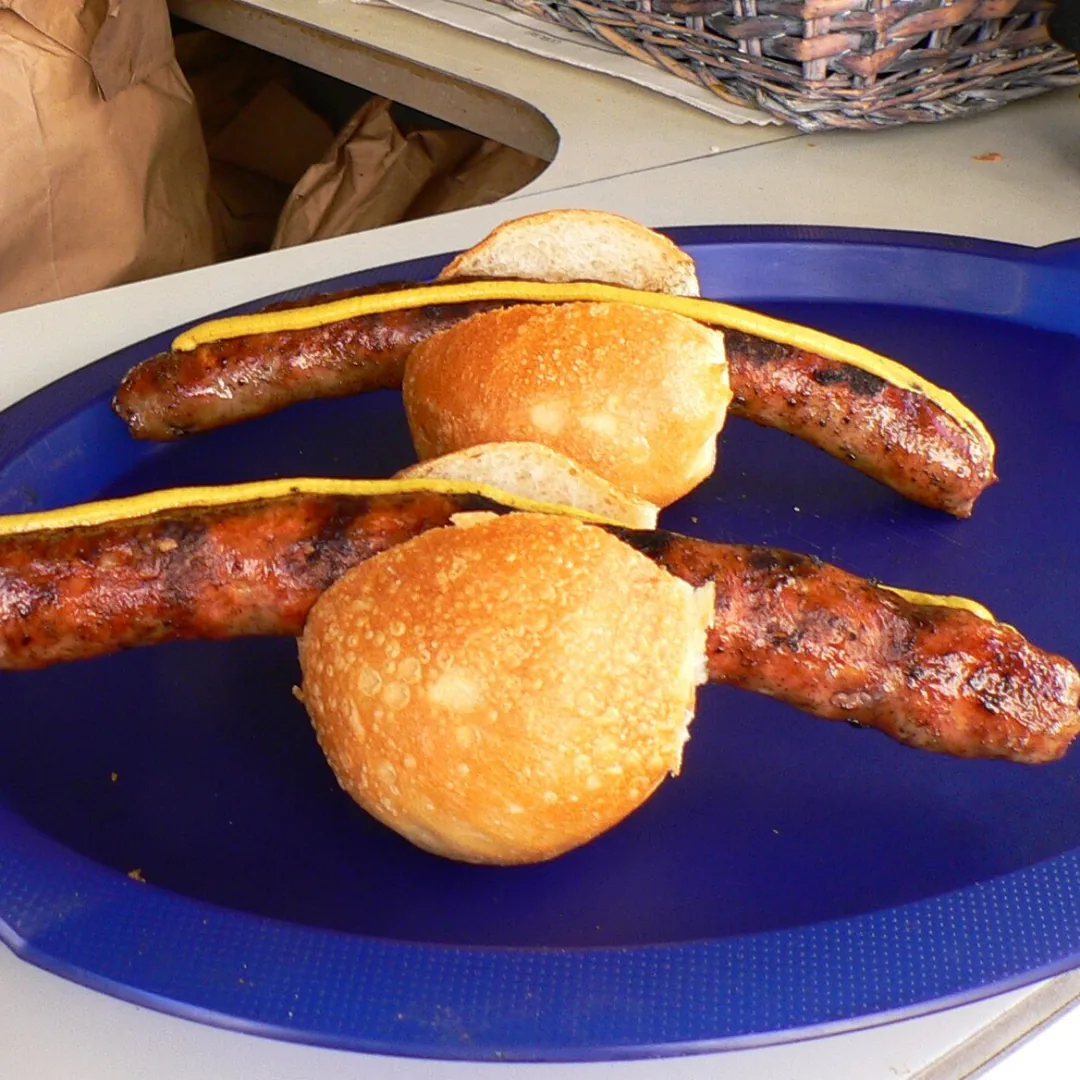
The Coburger is the opposite of the Nürnberger: long, coarse, strong and very distinctive. It is especially known for its traditional preparation over pine cones, called Kühla locally. That gives it a smoky, resinous aroma you should not confuse with an ordinary grilled sausage.
Typical features are the coarse texture, seasoning with pepper, nutmeg and lemon, and the special Schleiß or Bändel casing. Egg is traditionally used for binding. It is served in a roll cut from the top. If you visit Coburg, treat it as part of the city’s identity, not as a side snack.
Bamberger bratwurst
The Bamberger bratwurst sits somewhere between fine and coarse. It is often medium-coarse, gently seasoned and works beautifully with beer cellars, inns and Brotzeit. In Bamberg, bratwurst culture meets Rauchbier, Kellerbier and brewery taverns without the sausage overpowering everything.
There are also small local specialities such as beer bratwurst or schnapps bratwurst from individual butchers. These are not mass-market terms, but small examples of how closely craft and place can be connected.
Hofer bratwurst
The Hofer bratwurst is slender, fine and rather lean. It is grilled raw and lives from its direct bite. While Coburg is big and rustic, Hof feels thinner, more precise and more reduced.
For a journey through Upper Franconia, it shows how differently two northern Franconian cities can handle the same basic idea: Coburg powerful and rustic, Hof slim and fine.
Kulmbacher bratwurst
Kulmbach is a beer city, but it is also a bratwurst city. The Kulmbacher bratwurst is fine and is classically eaten in a Bratwurststollen, a long roll sprinkled with aniseed. A typical order is “a Boor im Halbn”, two sausages in half a Stollen. “Drei im Ganzn” is basically a full meal.
The Bratwurststollen makes the Kulmbacher especially memorable. It is not only about the sausage, but about the whole system of sausage, roll, city and habit.
Bayreuther bratwurst
The Bayreuther bratwurst is less famous than the Nuremberg, Coburg or Kulmbach versions, but that is exactly why it is interesting. It is a fine Upper Franconian bratwurst without much theatre. Bayreuth may be better known for Wagner and the festival, but this quieter bratwurst tradition belongs to the city too.
For visitors, Bayreuth is a useful reminder: not every important regional speciality comes with a legend, a legal seal or a world record. Some are simply part of everyday life.
Ansbacher bratwurst
The Ansbacher bratwurst is stronger, fuller and coarser than the Nürnberger. It stands for Middle Franconia beyond the most famous city. If you travel west of Nuremberg, this is the kind of bratwurst culture that belongs to inns, butcher shops and smaller towns.
Middle Franconia is a good place to learn that bratwurst is not only Nuremberg. Ansbach, Dinkelsbühl, Rothenburg, Weißenburg and smaller places all have their own habits and butcher traditions.
Würzburger bratwurst, Winzerbratwurst and Geknickte
The Würzburger bratwurst belongs to Lower Franconia and to a different food landscape: wine, the Main river, market stands, Schoppen and city food. It is often described as a Winzerbratwurst because Franconian wine can play a role in the seasoning. At sausage stands, it is often served bent into a Kipf, which gives it the nickname Geknickte.
This shows how closely food and region are tied together. In Bamberg you think beer cellars, in Nuremberg Drei im Weggla, in Würzburg wine country and Geknickte.
Schweinfurter bratwurst
The Schweinfurter bratwurst is strongly tied to freshness. Traditionally, it is prepared, blanched and eaten very close to the moment of sale. It is less about storage or export and more about local sausage culture where it is made.
For Find My Seidla, that matters because it shows the same thing as many small breweries: some things work best exactly where they are produced.
Treuchtlinger and Altmühlfränkische bratwurst
In southern Middle Franconia and the Altmühltal, bratwurst changes again. The Treuchtlinger or Altmühlfränkische bratwurst is often described as especially coarse. It fits a region that sits away from the big bratwurst cities and remains very much its own.
If you visit Weißenburg, Treuchtlingen, Pappenheim or the Altmühltal, do not think only of landscapes, fossils and cycle paths. There is a local food culture here too.
Sulzfelder Meterbratwurst
The Sulzfelder Meterbratwurst from Mainfranken is the most unusual form in this guide. You do not simply order it by piece, but by length, for example half a metre or a full metre. It is thin, long and served in pieces.
It is younger than many other Franconian bratwurst traditions, but that is part of what makes it interesting. Not everything regional has to be medieval. Some traditions appear later and still become part of local identity.
Quick reference
| Bratwurst | Region | Character | Remember |
|---|---|---|---|
| Nürnberger | Nuremberg | small, marjoram-spiced | Drei im Weggla, EU protection |
| Coburger | Coburg | long, coarse, strong | pine cones, Schleiß, roll cut from above |
| Bamberger | Bamberg | medium-coarse, rounded | good for Blaue Zipfel and beer cellars |
| Hofer | Hof | slender, fine, lean | grilled raw, clear bite |
| Kulmbacher | Kulmbach | fine, mild | Bratwurststollen with aniseed |
| Bayreuther | Bayreuth | fine, understated | everyday food, not a showpiece |
| Ansbacher | Ansbach | strong, coarse | Middle Franconian inn character |
| Würzburger | Würzburg | medium-fine, spicy | Winzerbratwurst, Geknickte in a Kipf |
| Schweinfurter | Schweinfurt | fresh, local | best eaten directly where it is made |
| Treuchtlinger | Altmühlfranken | very coarse | robust bite |
| Sulzfelder | Mainfranken | long, thin | Meterbratwurst ordered by length |
Which beer works with which bratwurst?
A rough guide
- Nürnberger: Rotbier, Helles or Kellerbier.
- Coburger: a stronger Lager, Märzen or Kellerbier that can stand up to smoke and grill aromas.
- Bamberger: Kellerbier, Ungespundetes or, when it fits, Rauchbier.
- Kulmbacher: Helles, Pils or Export from the region.
- Würzburger: beer works, but in Mainfranken a glass of Silvaner also makes sense.
- Blaue Zipfel: mild Kellerbier, Helles or a not-too-bitter lager.
The most important rule remains simple: drink local. A regional bratwurst with a regional beer is almost always better than a theoretically perfect pairing rule.
One last thought
Franconian bratwurst cannot be fully catalogued. That is not a problem, it is the point. Every city, many villages and countless butchers have their own idea of what it should be. Just like with beer, the truth is not in one single definition, but in moving through the region.
If you understand Franconia through bratwurst, you also understand something about Franconia itself: small-scale, stubborn, craft-driven, tradition-conscious and rarely louder than necessary. Bassd scho.
Main guides for this topic
If you want to keep planning after this article, these overview guides are the fastest next step.
Start with the regions, brewery types, density and sensible first stops.
Open guide →Trip planningPlan a Franconia beer tripBamberg, Nuremberg, Franconian Switzerland and practical travel decisions.
Open guide →Beer knowledgeRecognize Franconian beer stylesKellerbier, Rauchbier, Zoigl, Rotbier and other styles explained clearly.
Open guide →