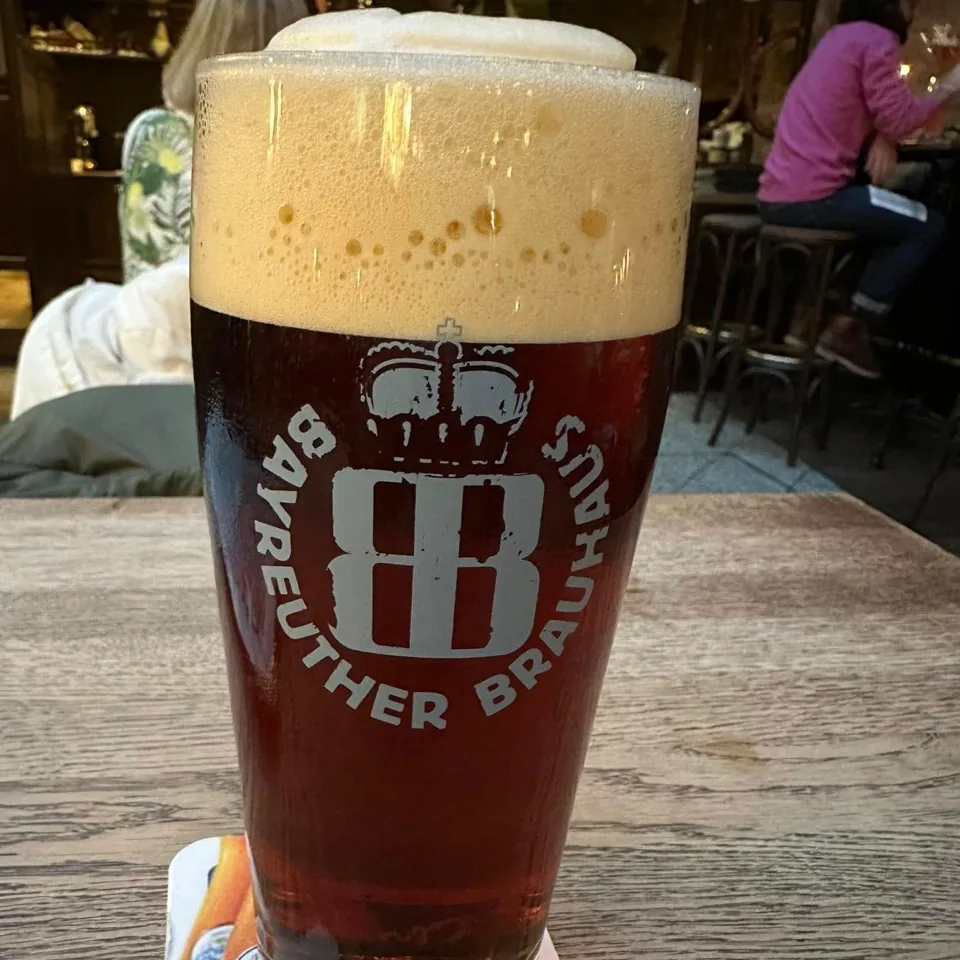
Kellerbier
Kellerbier is usually unfiltered, fresh, lightly cloudy and often softer than a bright filtered lager. Important: in Franconia, Kellerbier is more a way of serving and lagering than a tightly defined style. A pale, amber or darker Kellerbier can taste completely different from brewery to brewery.
For beginners, Kellerbier is almost always the best first order at a beer cellar.
Kellerbier is usually a bottom-fermented lager. Bottom-fermented means the yeast ferments cool, at 4 to 9 °C, and sinks to the bottom at the end. The beer then matures cold, in the past in cool cellars, hence the name. A Helles is filtered before it is filled; Kellerbier is not, so yeast and fine particles stay in the beer. That is why it is cloudy and tastes fuller and a little yeasty. Traditionally it is also kept under less pressure while it matures and often has a little less carbonation.
Kellerbier, Zwickel, Ungespundetes: the differences →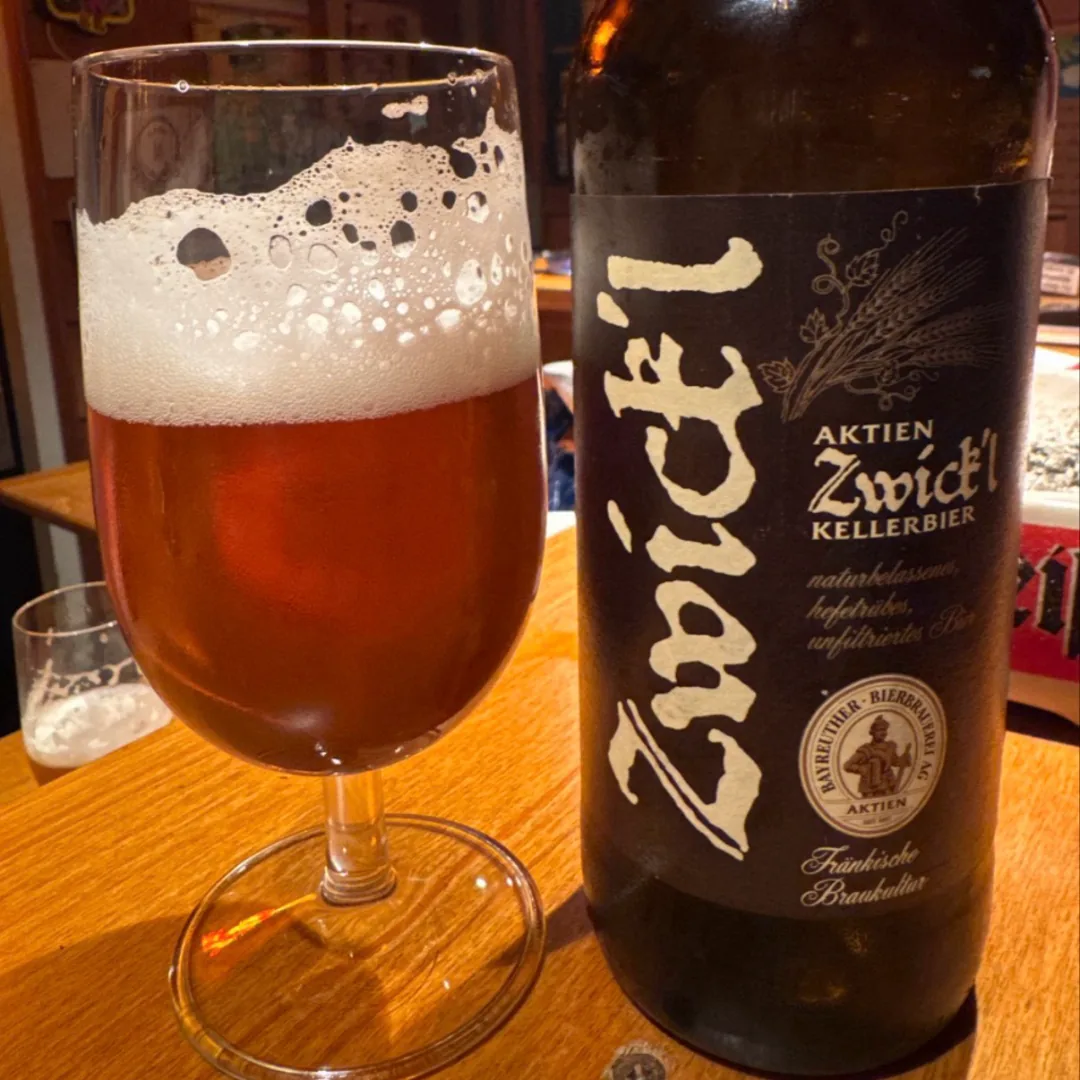
Zwickl
Zwickelbier comes from the Zwickelhahn, the sample tap on a lagering tank or cask. Brewers used it to taste beer before filtration. In practice, Zwickelbier is usually naturally cloudy, unfiltered and fresh. It overlaps strongly with Kellerbier.
The difference is mostly in emphasis: Kellerbier points to cellar storage and natural cloudiness, while Zwickel points to fresh beer drawn before filtration.
Zwickl is brewed like Kellerbier: bottom-fermented, then matured cold in the lagering tank. While it matures, the brewer draws a sample through the Zwickelhahn, the sample tap, to check how far along the beer is. Zwickl is that young beer as it comes out of the tank: before filtration and with its yeast. Because it can be brewed from different raw materials, its colour ranges from pale to amber, and a Zwickelpils is clearly hop-forward.
Kellerbier, Zwickel, Ungespundetes: the differences →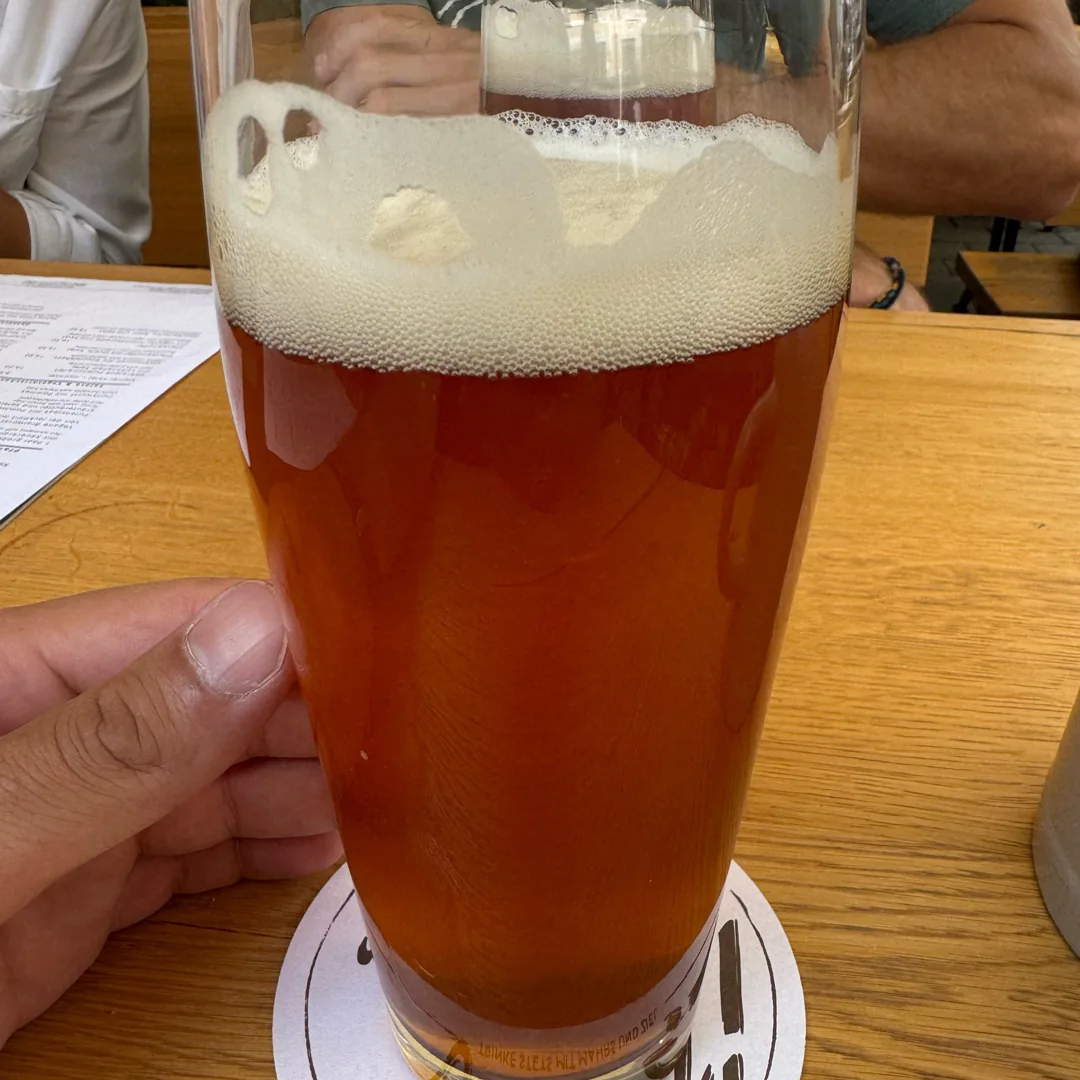
Ungespundetes
Ungespundetes, often shortened to "U", has less trapped carbonation. It feels softer, rounder and less fizzy. Around Bamberg, it is a very good starting point if Rauchbier feels too intense.
With Ungespundetes, the point is not cloudiness but pressure and carbonation. After the main fermentation, the beer goes through a secondary fermentation in the cask or tank. Normally it is bunged during this stage, kept under pressure so that the carbon dioxide stays in the beer. For Ungespundetes the brewer deliberately does without this: no extra pressure builds up, and the carbon dioxide is not held firmly in the beer. That is why it is less fizzy, softer and rounder.
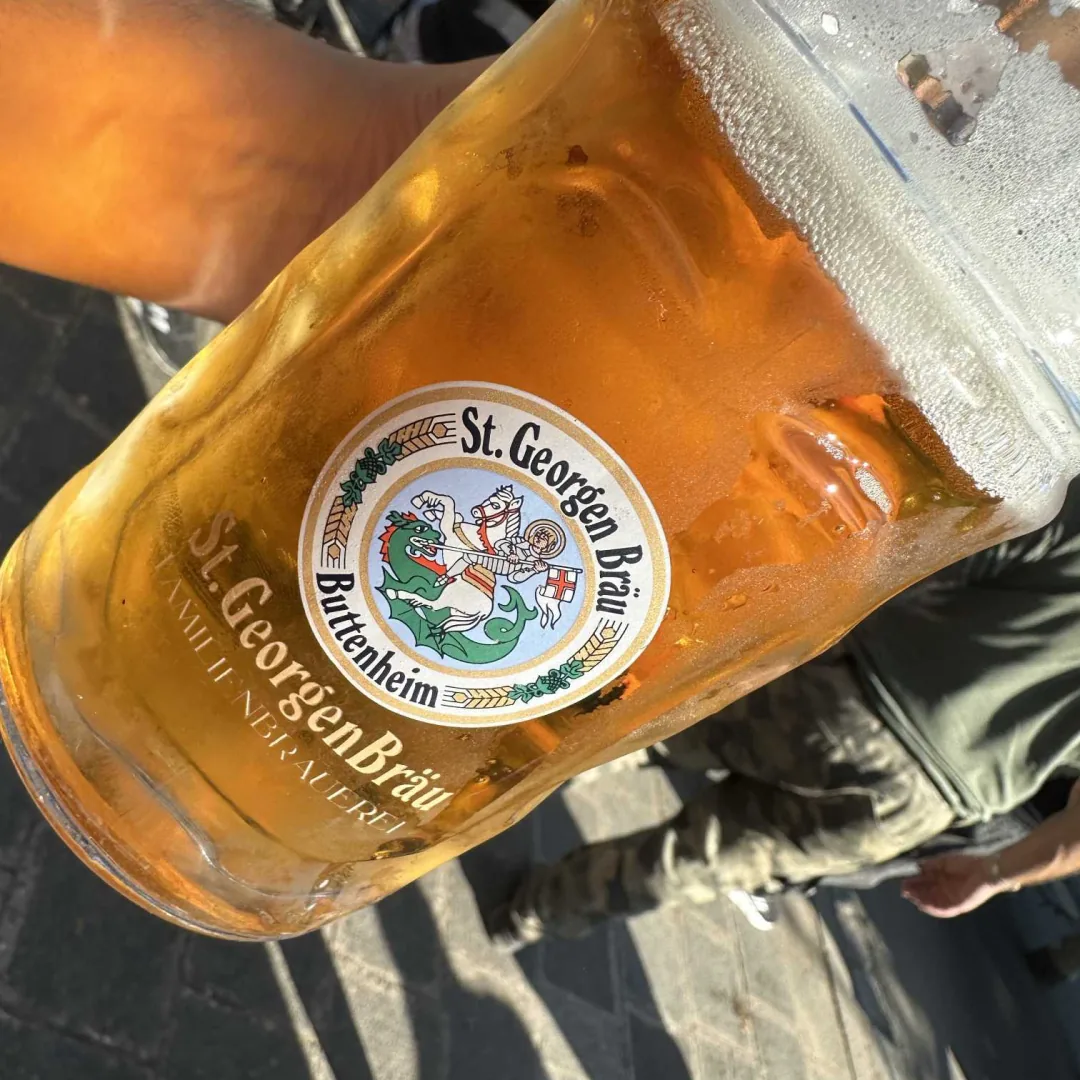
Helles / Vollbier
The everyday beer of many breweries: clear, golden, drinkable and usually less loud than the special styles. Precisely because of that, a good Helles shows whether a brewery works cleanly. "Vollbier" on a board, by contrast, is not a style but the strength class of 11 to under 16 percent original gravity, which also takes in Märzen, Schwarzbier and Festbier; many houses use the word for their everyday beer.
Helles is bottom-fermented and brewed only from barley malt, mostly Pilsner malt. It stays pale because the malt gets little heat in the kiln, where it is dried after germinating. The main difference from Pils is the hops: Helles is lightly hopped and stays mild, Pils is hopped more and is more bitter. Before it is filled, Helles is filtered and pours clear. Left unfiltered, it is also called Kellerbier or Zwickelbier.
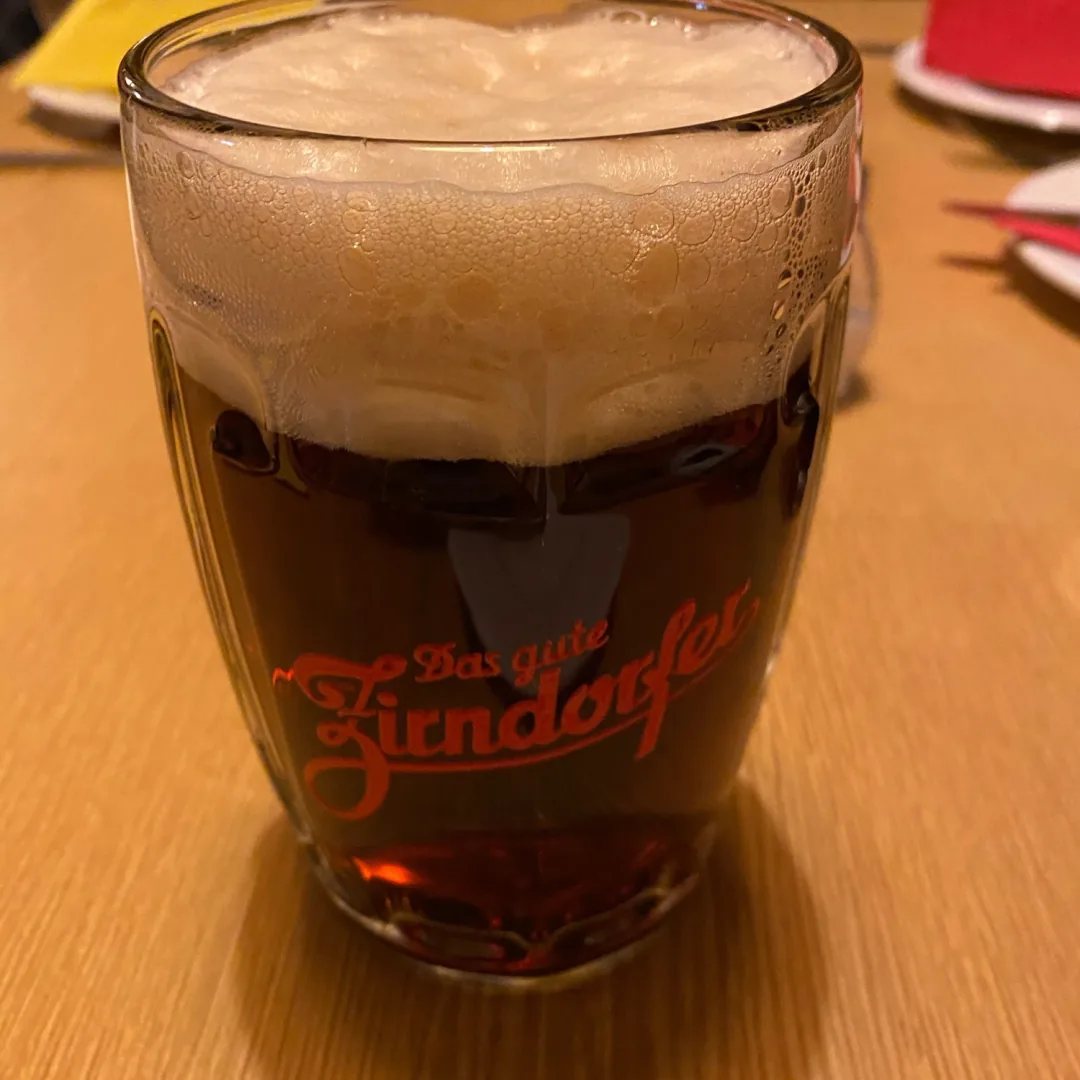
Dunkles
A Dunkles is a bottom-fermented beer with 10 to 14 per cent original gravity and 4.6 to 5.6 per cent alcohol. Its colour sits between medium and dark brown, and it comes from the malt: the more strongly the malt is kilned, the darker the beer.
Dark lagers are drunk all over Germany, but their heartland is Bavaria. In Franconia many breweries have a Dunkles next to their Helles, and some call it Dunkles Lagerbier. What separates it from Schwarzbier is the roast: a Dunkles is malty, with at most a light roasted note; it is not coffee in a glass.
A Dunkles is bottom-fermented and lagered cold like a Helles; the malt makes the difference. A Dunkles uses dark malt, kilned longer and hotter. Kilning creates colour and aroma at once, which is why a Dunkles tastes of bread crust, caramel and malt. Strong roasted aromas from a lot of roasted malt are not part of it; they are what makes a Schwarzbier.
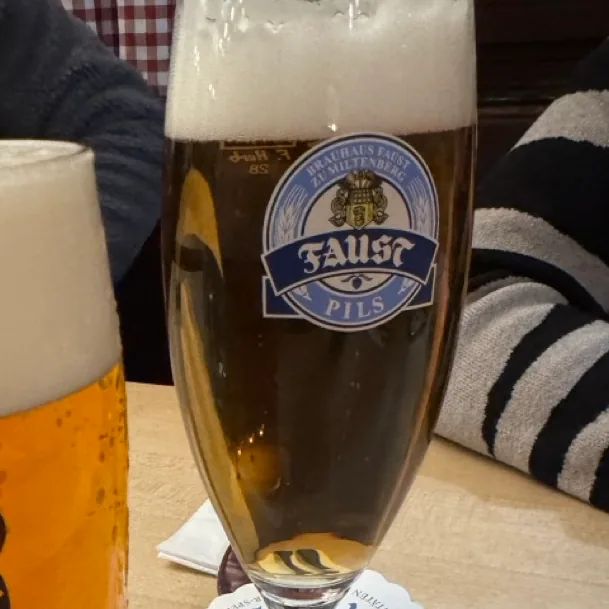
Pils / Pilsner
Pils is a bottom-fermented, very pale beer in which the hops clearly come first: bitter and often with a spicy, herbal aroma. A Bavarian brewmaster created it in the Bohemian town of Pilsen, where it was first served in 1842.
If you like your beer more bitter than a Helles, order a Pils. In Bamberg, Keesmann is known for its Herren Pils.
Like Helles, Pils is brewed from very pale, gently kilned malt known as Pilsner malt. The hops make the difference: Pils is hopped more heavily, so it is more bitter and smells more clearly of hops. It ferments slowly and cold with bottom-fermenting yeast and then matures for a long time. For the first brew in Pilsen, the brewmaster used the very soft local water, low in salts, and hops from Saaz in Bohemia.
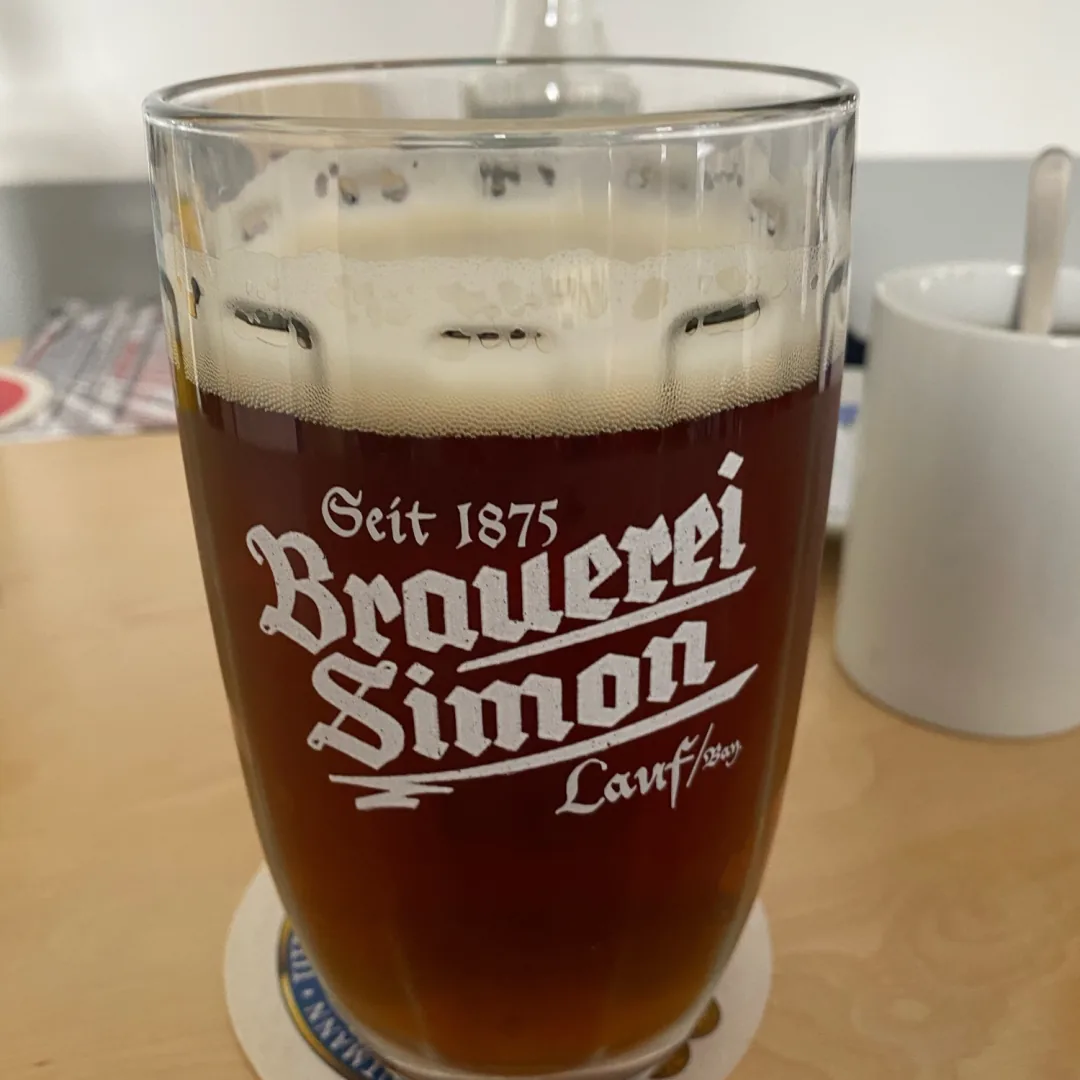
Märzen
Märzen is maltier, fuller and often amber to copper in colour. In Franconia, it is often a robust, full-bodied pub beer, not just an Oktoberfest word.
The name comes from brewing in March. From the brewing ordinance of 1539 onwards, beer in the Duchy of Bavaria could only be brewed between Michaelmas (29 September) and St George's Day (23 April), because boiling in summer brought too great a risk of fire; Franconia was not yet part of Bavaria. So that the beer would last through the summer, a longer-keeping one was brewed in March: with more original gravity, meaning more malt dissolved before fermentation, with more alcohol and more hops. It was stored in rock cellars with chestnut trees planted above them for shade. Over time, serving beer there grew into the Franconian Bierkeller. Today Märzen is a bottom-fermented lager with at least 13 percent original gravity, stronger and maltier than a Helles.
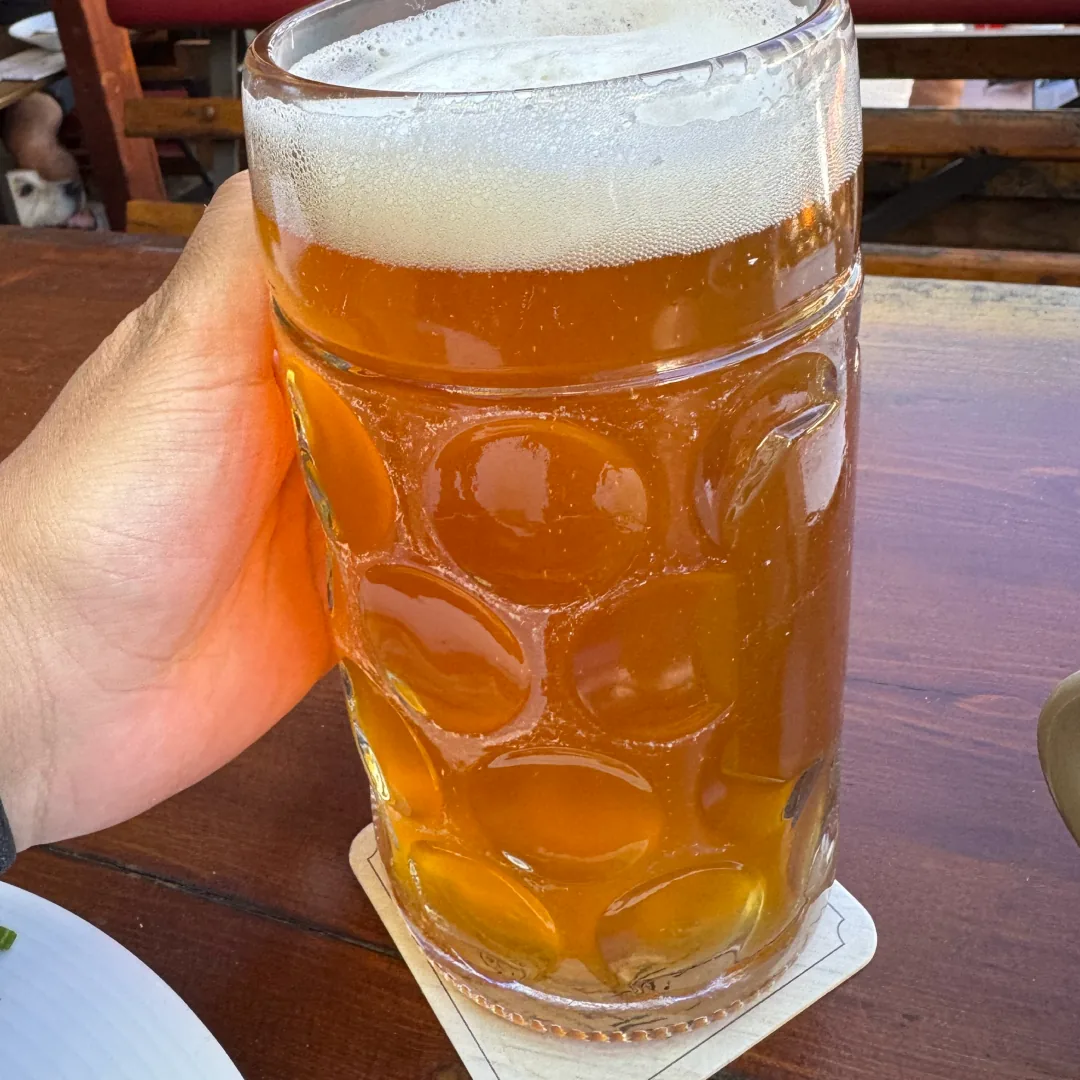
Festbier
Festbier is not a recipe, it is an occasion. German beer regulation sets names by original gravity: below 7 percent "Bier mit niedrigem Stammwürzegehalt", below 11 percent "Schankbier", from 16 percent "Starkbier" or "Bockbier". It has no Festbier, and the German Brewers' Association does not list it among its styles. What counts as a Festbier is up to the brewery that taps it for the Kärwa.
The beer of a Kärwa may be brewed for the feast or may come from the house's normal range. The classic festival style is historically the Märzen: the beer brewed in March, keeping longest and drunk last, which is why the beer at the Oktoberfest used to be a Märzen. In Franconia, only the label or the bar tells you what is actually in the glass.
A Festbier is a Vollbier, a beer of 11 to under 16 percent original gravity, and not a recipe of its own; German beer regulation has no Festbier. Where it differs from the everyday beer, the difference lies in the original gravity: more malt in the wort means more alcohol and more body. For comparison, a Märzen is bottom-fermented and has at least 13 per cent original gravity. There is no ingredient that makes a beer a Festbier; it is the beer a house pours for its feast.
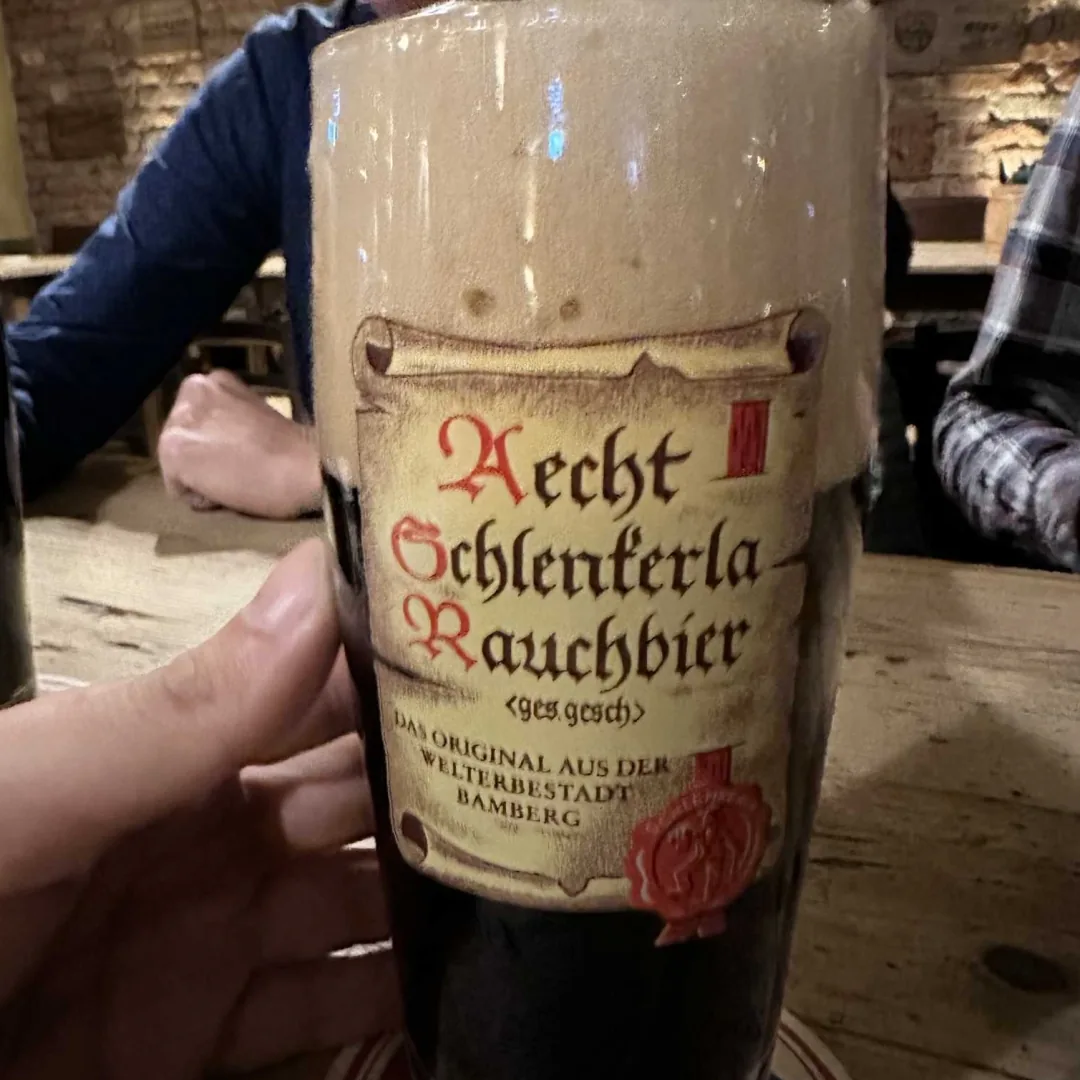
Rauchbier
Rauchbier belongs to Bamberg. The smoky flavour comes from malt dried over wood smoke. Schlenkerla and Spezial represent the unbroken Bamberg tradition, with very different smoke profiles.
Malt is grain that has germinated and then been dried in a kiln. In the past an open wood fire often helped: heat and smoke passed through the damp malt, and many beers tasted smoky. With smoke-free kilns this disappeared almost everywhere, but not in Bamberg: Schlenkerla and Spezial still kiln their malt over beechwood fires in their own maltings. So the smoke comes from the malt, not from added smoke. That makes Rauchbier a flavour more than a single style: there are Märzen, lager, wheat beer and Bock made with smoked malt. The best known, Schlenkerla Rauchbier, is a Märzen.
Rauchbier Guide for First-Timers →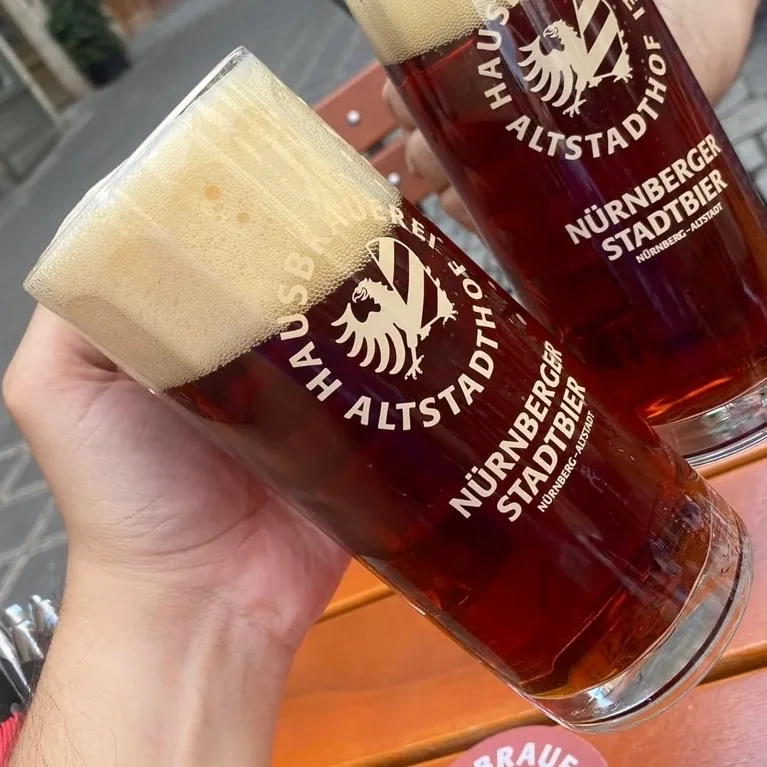
Rotbier: Nuremberg's Heritage
Rotbier is closely tied to Nuremberg: copper-red and malty, found in the city at the Hausbrauerei Altstadthof, for example. It is not a Dunkles but a Nuremberg style of its own.
Today Rotbier is a bottom-fermented beer. As early as 1302 to 1310, Nuremberg laid down which grain could go into beer: barley rather than other grains. The flavour depends on how much malt and hops go into the brew; the colour, from a reddish yellow to red-brown, comes from the malt. Some breweries use a colouring malt for this, known as red malt. The exact recipe differs between breweries. Because bottom-fermented beer needs cold, Nuremberg's beer was stored and matured in rock cellars cut into the sandstone beneath the old town.
Nuremberg Beer Guide →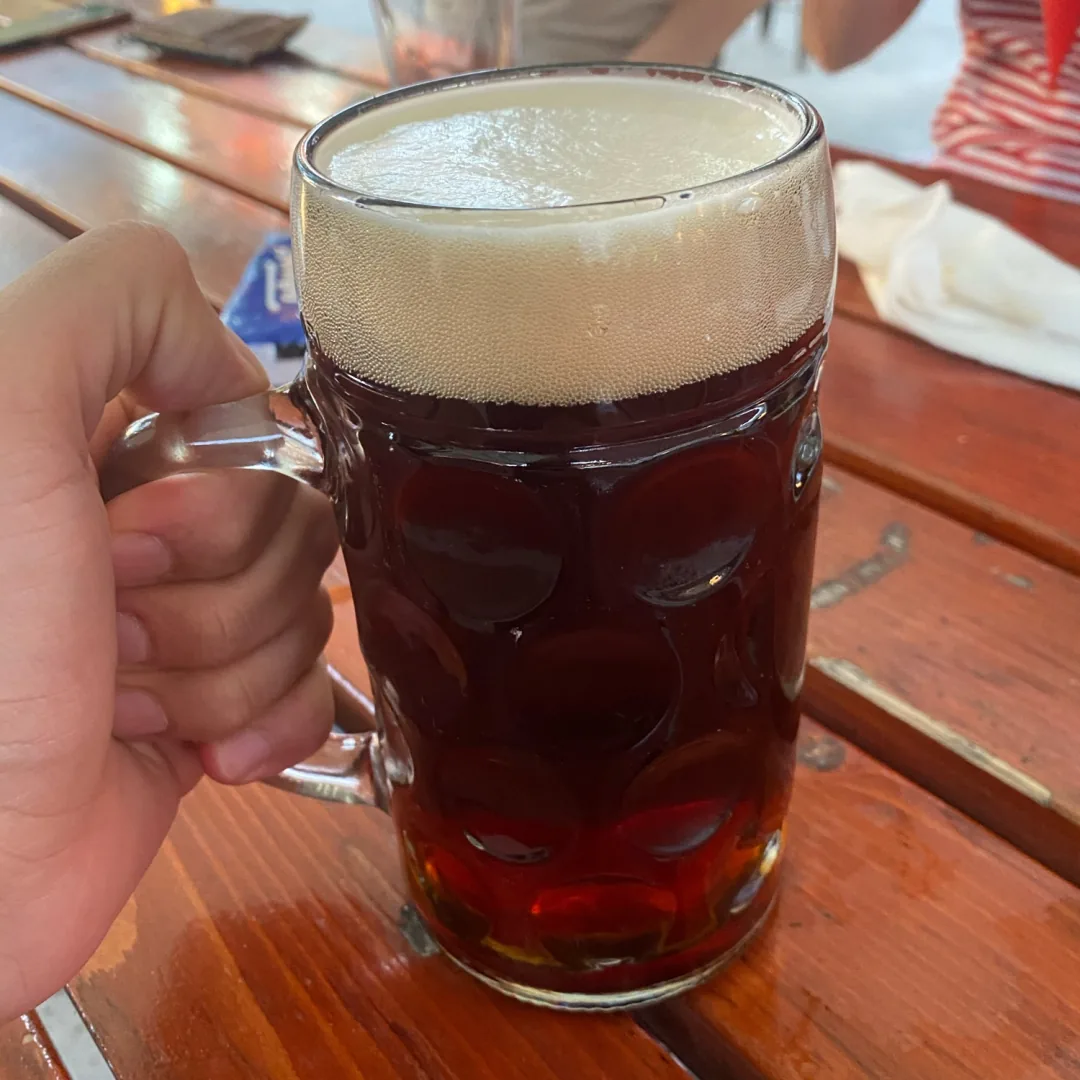
Schwarzbier
Schwarzbier is a bottom-fermented beer made with dark or roasted malt: usually opaque, dark brown to black, with strong roasted aromas and notes of coffee and cocoa. It feels dry and full-bodied. Despite its colour it is not a strong beer but a Vollbier with 4.6 to 5.6 percent alcohol.
It was first mentioned in records in Thuringia in 1543. A well-known Schwarzbier from Franconia is Mönchshof Schwarzbier from Kulmbach.
Today Schwarzbier is mostly bottom-fermented, unlike in the past, when it was still top-fermented. Its colour comes from the malt: the more strongly malt is kilned or roasted, the darker the beer. Schwarzbier is brewed with dark malt or roasted malt, which gives it its colour and the roasted aromas reminiscent of coffee and cocoa. The hops hold back, and their bitterness stays in the background.
Landbier
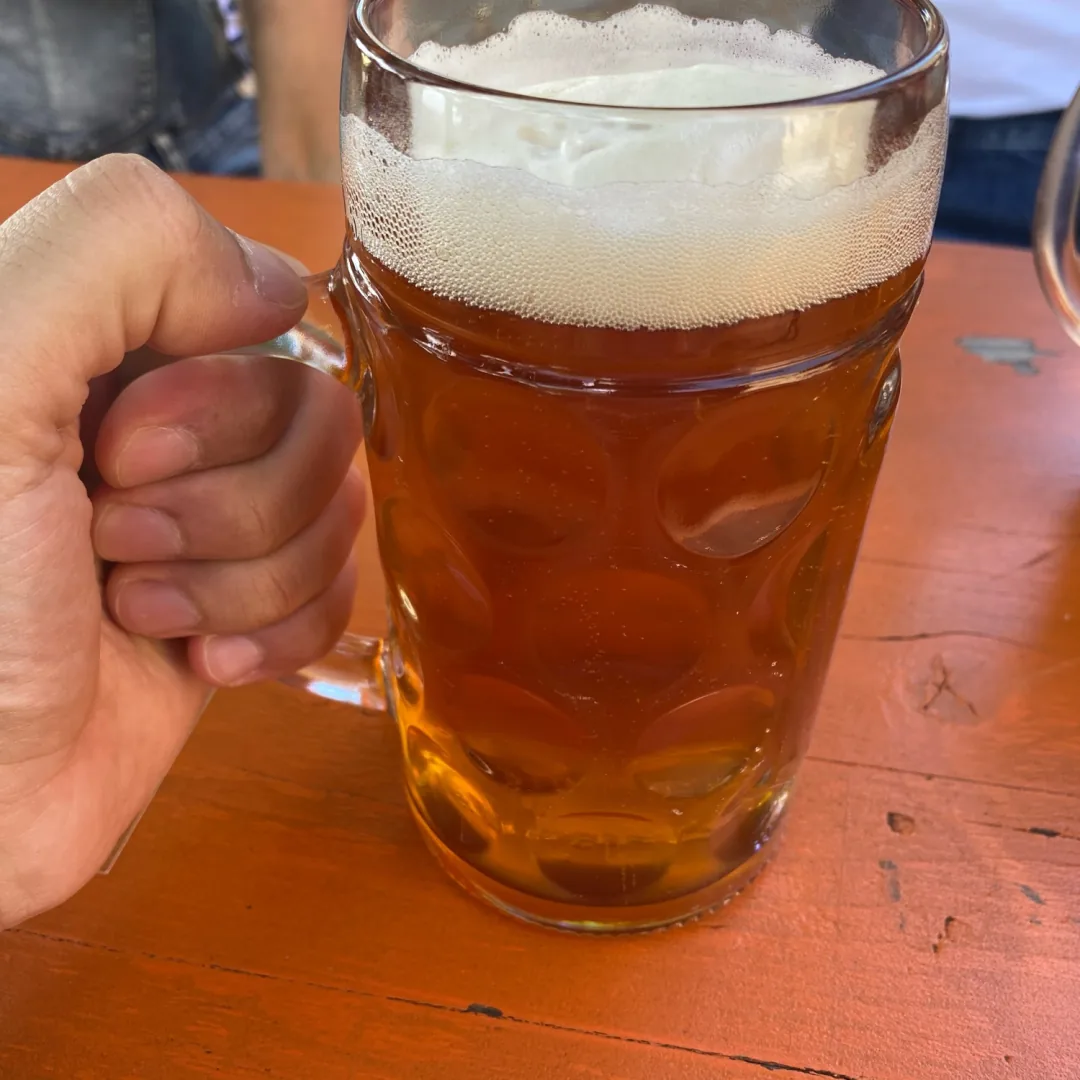
Landbier is not a narrow style. It is often how small breweries describe their own house beer: local, grounded, pale or dark, depending on the recipe. It can be excellent, but the name alone does not tell you everything.
Landbier has no fixed recipe: each brewery decides in its own house recipe how to brew it. Two Franconian ranges already show this. The Bayreuther Bierbrauerei brews its Aktien Landbier as a dark beer. Brauerei Reh in Lohndorf, in the district of Bamberg, makes two: an Ellertaler Landbier Hell and an Ellertaler Landbier Dunkel. So whether a Landbier is pale or dark, only the menu will tell you.
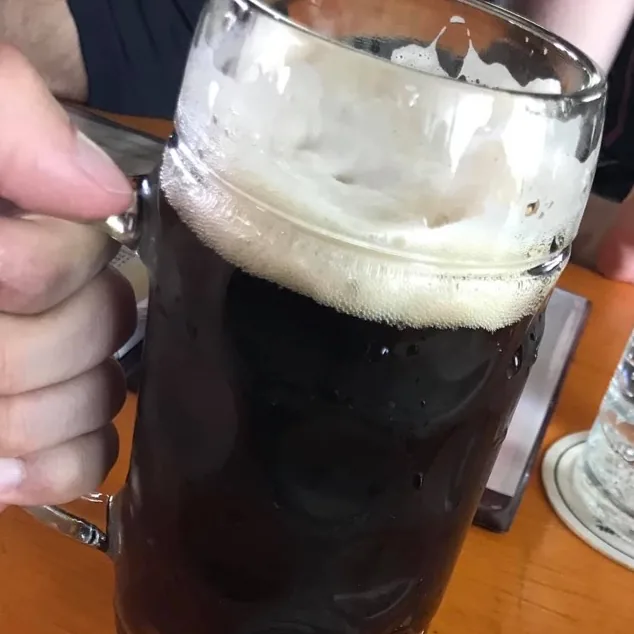
Bockbier / Doppelbock
Bockbier is stronger, maltier and seasonal. Many Franconian breweries serve Bock in autumn or during Starkbier season. In smaller towns, the Bockbieranstich can be an important date in the beer year.
Drink it slowly: Bock tastes friendly, but it carries much more alcohol than a normal Seidla. If you are planning around Aischgrund, carp season or local tappings, check what is actually being served.
Bockbier is a strong beer, and that is decided when it is brewed. What counts is the original gravity: how much has been dissolved from the malt before the yeast gets to work. A Vollbier has 11 to under 16 percent, a Bock 16 percent or more, a Doppelbock at least 18. To get there, less water goes to the malt in the mash, the mash is thicker, and from all that malt sugar the yeast ferments more alcohol. The name comes from Einbeck in Lower Saxony: an Einbeck brewmaster brewed his "Ainpöckisch Bier" in Munich in the early 17th century, and in the local dialect it became Bock.
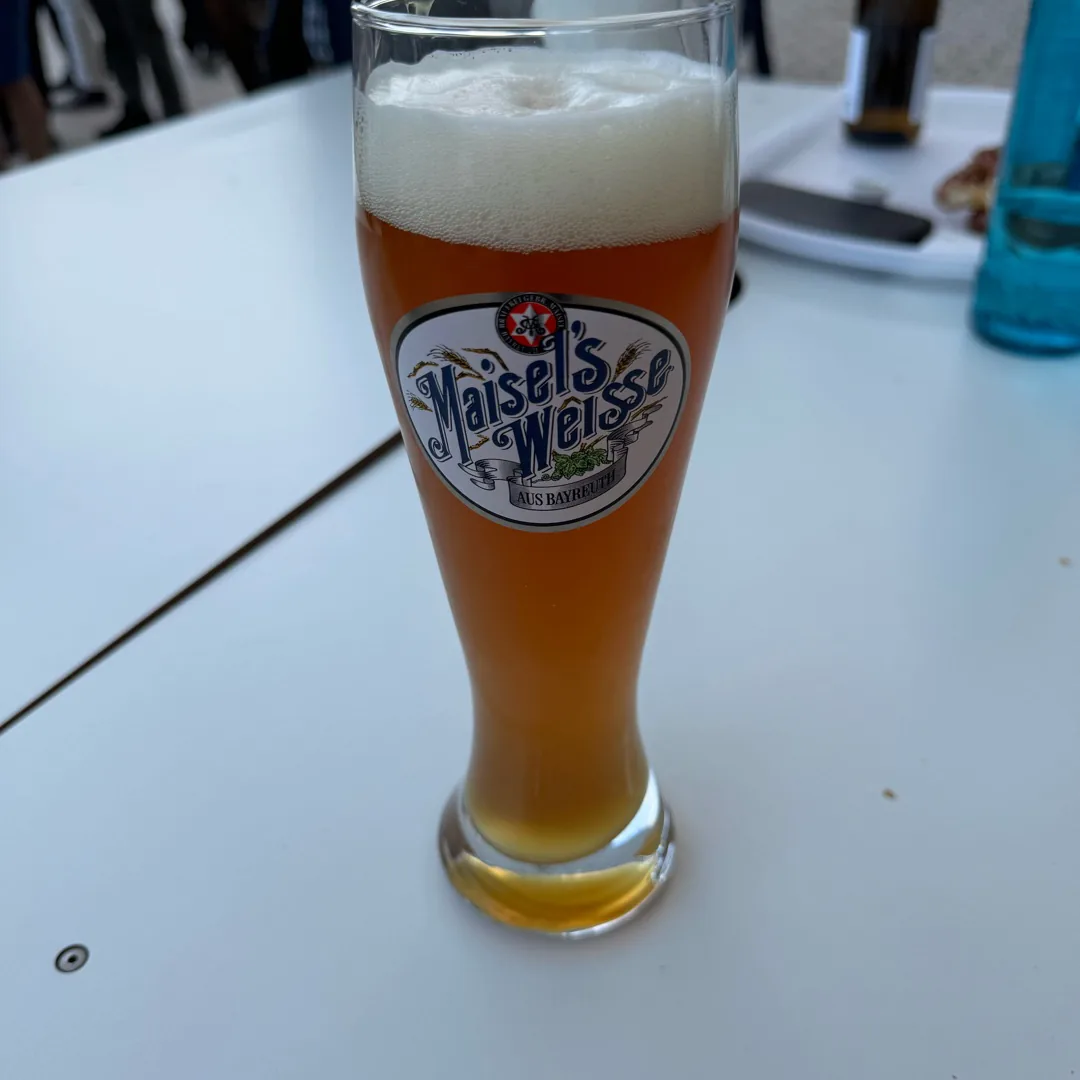
Weißbier / Hefeweizen
Weißbier exists in Franconia too, of course, but it is rarely the reason to travel here. If Kellerbier, Rauchbier or Ungespundetes are available, start there.
Weißbier is top-fermented: the yeast works warmer, at 15 to 20 °C, and floats on top of the young beer while it ferments. Besides barley malt, the mash contains a lot of wheat malt, often up to 70 percent. The typical aromas develop during fermentation and maturation: the banana comes from isoamyl acetate, often joined by a note reminiscent of cloves. A classic Hefeweizen goes through its secondary fermentation in the bottle and the yeast stays in, which is why it is cloudy. For Kristallweizen the yeast is removed before bottling.
Seasonal beersSeasonal Beers
Many Franconian beers follow the calendar. That makes the region interesting, but also less predictable.
Franconian Beer Calendar
- February to April: Starkbier and Lent season, depending on brewery
- April to October: Kellerbier and summer operation at beer cellars
- May to October: Kärwa, Bergkirchweih and Annafest shape the selection
- September to November: Bockbier tappings and stronger autumn beers
- December: winter Bocks, Festbier and darker specialties
What to Order First?
- At a beer cellar: order Kellerbier or the house beer
- In Bamberg: try Spezial or Schlenkerla first if Rauchbier is the goal
- In Nuremberg: look for Rotbier, especially at historic breweries
- At village breweries: ask which beer is currently freshest
- With Bockbier: plan for fewer glasses, since Bock carries much more alcohol than the house beer
- In Aischgrund: think of Bockbier and carp as seasonal, and check local dates
- When unsure: a Seidla of the house standard beer is almost never wrong
