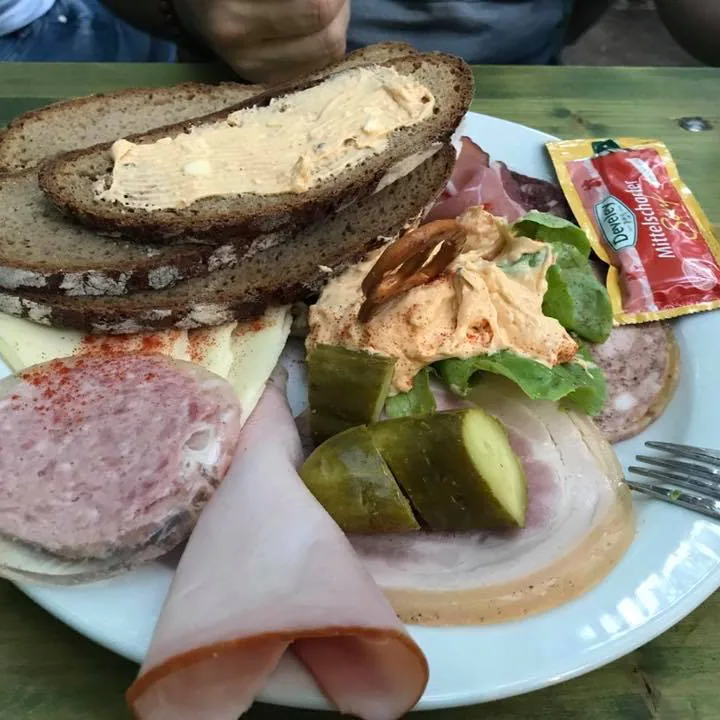
A Franconian Brotzeit is a cold meal built around strong bread and regional sausage, cheese and spread specialities. Typical elements include red and white Pressack, liver sausage, smoked ham, Sülze with vinegar and onions, Gerupfter or Obazda, mustard, pickles, radishes and horseradish radish. In beer cellars, on hikes, at Kärwa festivals and in Zoigl taverns, Brotzeit is not a side note. It is part of the culture.

Franconian Brotzeit with hearty ingredients
In Franconia, a Brotzeit is not a side issue, but often exactly what makes a Seidla complete.

Franconian Brotzeit: the essentials

  • Bread: farmhouse bread, rye bread, country loaf, sometimes pretzels or lye pastries
  • House-made sausage: Pressack, liver sausage, blood sausage, Stadtwurst, Pfefferbeißer
  • Smoked and cured: ham, cold roast, Landjäger or other dried sausage
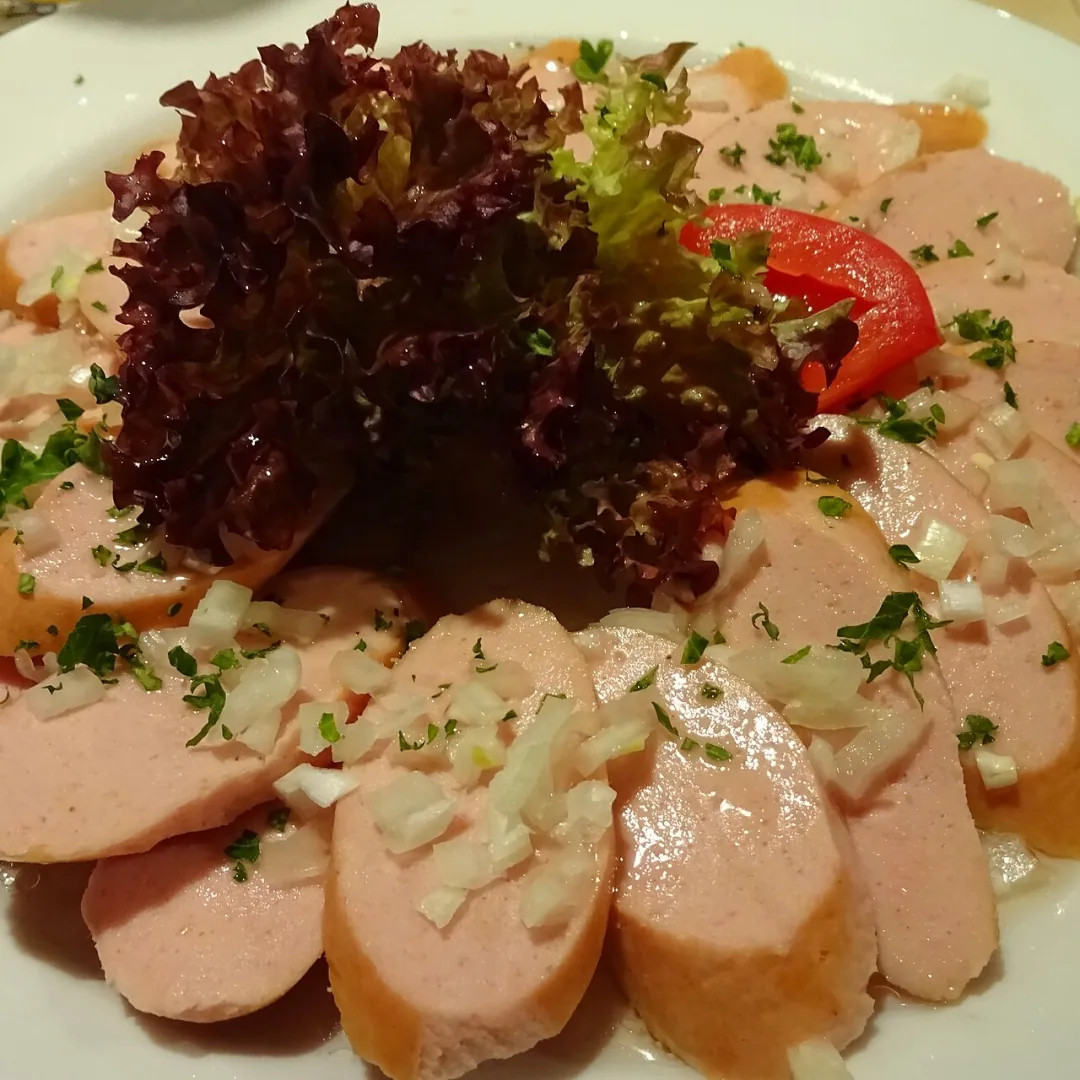
  • Served sour: Sülze, Pressack or Stadtwurst with vinegar, oil and onions
  • Cheese: Gerupfter, Obazda, Limburger, sliced cheese
  • On the side: mustard, pickles, radishes, horseradish radish, onions

What Is a Brotzeit?

Literally, Brotzeit means bread time. In Franconia, it means more than a slice of bread on the side. It is a cold meal that sits between work, walking, beer cellars and evening. It is simple, but not random. Bread is the base, everything else is added around it: sausage, cheese, pickles, mustard, onions, sometimes cold roast, sometimes Sülze, sometimes only Gerupfter and a knife.

Brotzeit matters because it fits Franconian beer culture perfectly. Schäufele needs a kitchen, a plate and time. Brotzeit needs a wooden board, a knife and a Seidla. That is why it works in beer cellars, on hiking trails, at Kärwa, in Gasthöfe and in Zoigl taverns.

The Brettla: Not Decoration

The classic Franconian Brotzeit often arrives on a wooden board, the Brettla. This is not rustic theatre for photos. It is practical: cut bread, cut sausage, add mustard, add pickle, done. In Upper Franconia, the Brotzeit board belongs to the everyday visual language of taverns and beer cellars. It says: this is not plated, this is eaten.

There is no single fixed Brotzeit plate. A Brotzeit in Bamberg may look different from one in Kulmbach, Fränkische Schweiz or the Aischgrund. The principle stays the same: cold, regional, filling and beer-friendly.

Pressack: The Test

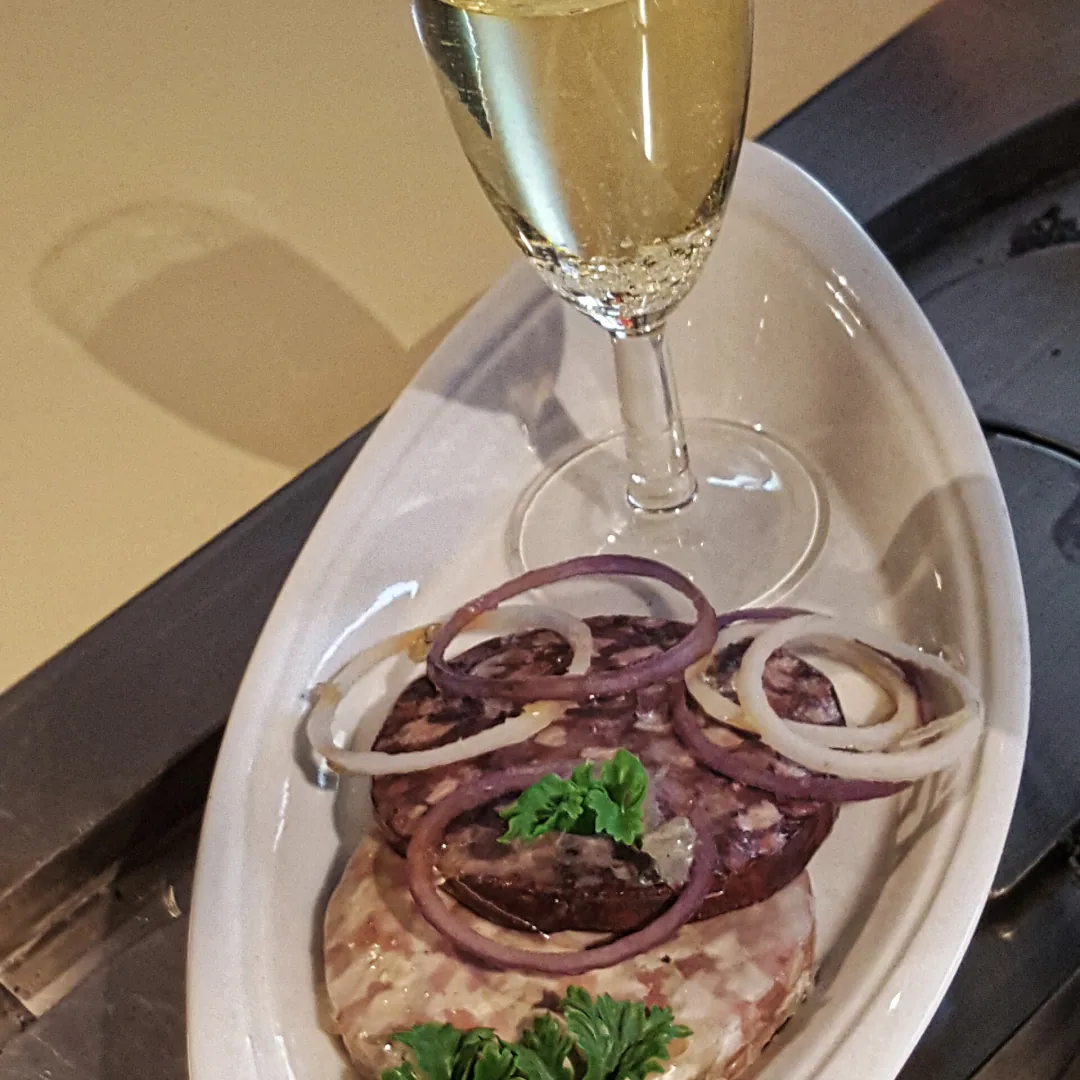
Pressack, also written Presssack in German, is one of the clearest markers of a Franconian Brotzeit. There is red and white Pressack. White Pressack is usually made with rind mass, broth and pieces such as head meat or shoulder. Red Pressack contains blood, making it darker and stronger.

It is eaten in thick slices, either directly on bread or served sour with vinegar, oil and onions. If you order Pressack, you are not ordering tourist food. You are ordering house-butchery tradition, nose-to-tail cooking and a cuisine that did not waste the animal.

Understanding Pressack

  • White Pressack: milder, lighter, often with head meat and rind mass
  • Red Pressack: stronger, darker, made with blood
  • Sour style: vinegar, oil and onions
  • With beer: especially good with Kellerbier, Landbier or Märzen

Liver Sausage, Blood Sausage, Stadtwurst and Ham

A good Brotzeit depends on the butcher. Liver sausage goes on bread, blood sausage can be eaten cold or fried, Stadtwurst may appear in slices on the board or as Stadtwurst mit Musik, with vinegar, oil and onions. Smoked ham adds salt, smoke and bite. Cold roast is Sunday leftovers turned into something better than leftovers.

That sounds simple, and that is the point. Franconian Brotzeit is not about complicated preparation. It is about good basic products. Bad Pressack stays bad, however nicely it is arranged. Good liver sausage from a proper butcher needs no explanation.

Sülze mit Musik

Sülze is one of those foods that visitors often underestimate. It is served cold, in slices or pieces, usually with vinegar, oil and onions. The phrase “mit Musik” does not mean anyone is playing music. It means onions. The acidity makes the Sülze fresh, the beer does the rest.

On a Brotzeit board, Sülze can look modest. As a small meal of its own, with bread or fried potatoes, it can be very honest beer cellar food.

Gerupfter and Obazda

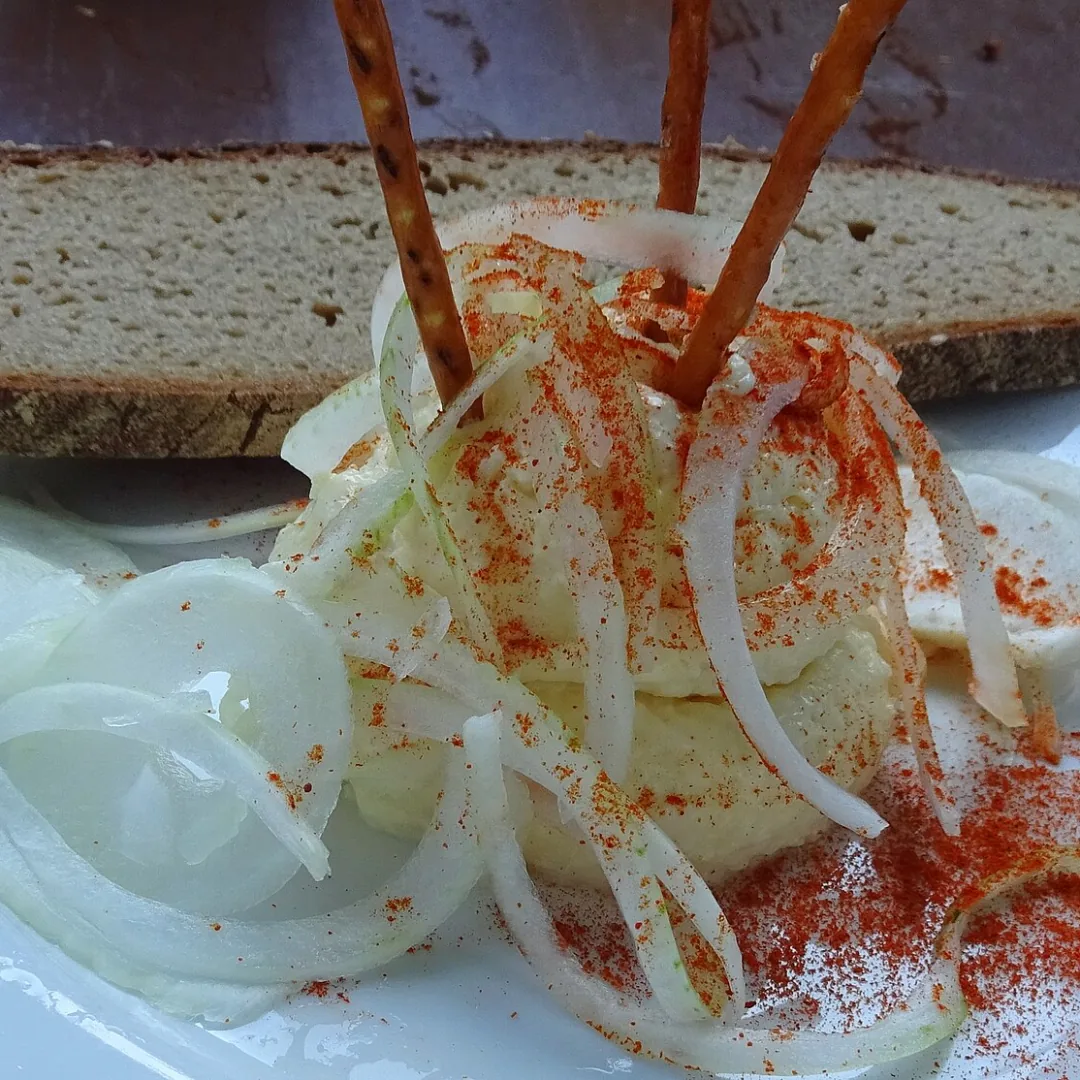
Gerupfter is the Franconian answer to Obazda. It is a spicy cheese spread made from ripe Camembert, often with Limburger or another strong cheese, butter, cream cheese, paprika, caraway, onions and sometimes a splash of beer. The name comes from tearing and mashing the cheese.

Obazda is more strongly associated with Old Bavaria and is protected as a Bavarian speciality, but it has long arrived in Franconian beer cellars. For Find My Seidla, the practical difference is simple: if it is meant in a Franconian way, people often say Gerupfter. If the menu says Obazda, that is not a scandal. The only crime is when it tastes like cream cheese with paprika.

Gerupfter vs. Obazda

  • Gerupfter: Franconian cheese spread, often stronger and more rustic
  • Obazda: Bavarian cheese speciality with protected geographical indication
  • Both work with: farmhouse bread, radishes, horseradish radish, Kellerbier and wheat beer

Brotzeit in the Beer Cellar

The beer cellar is the natural habitat of Brotzeit. Many traditional beer cellars and beer gardens allow guests to bring their own Brotzeit. That is part of old Bavarian and Franconian beer garden culture. But house rules matter. If a cellar has a kitchen, a serviced restaurant area or clearly posted rules, follow those rules.

The best rule is simple: look at how the place works. Self-service, long benches, Brotzeit tables and people with baskets are a good sign. Tablecloths, table service and menus usually mean restaurant area. Then you order there.

Brotzeit on a Beer Hike

On a beer hike, Brotzeit is not romantic decoration. It is practical. A Landjäger, a piece of cheese, bread, pickles and a knife can make the difference between a good hike and a bad idea. Especially on longer routes such as the Fünf-Seidla-Steig® or in the Wiesent valley, do not assume every stop will serve hot food exactly when you are hungry.

The best hiking Brotzeit is robust: nothing that melts quickly, leaks or needs much tableware. Landjäger, Pfefferbeißer, cheese, bread, radishes, apple. And water. Beer does not replace water, not even in Franconia.

Brotzeit at Kärwa and Zoigl

At Kärwa, Brotzeit often shifts toward festival food: bratwurst, roast meat, Krenfleisch, Küchla, chicken, depending on the village. Still, the logic is similar: food, beer, village, shared table. At Zoigl, Brotzeit is even closer to the core. You sit in a tavern, drink the house beer and eat simple cold food with it. No show, no menu theatre, just what fits.

What to Drink with It

BrotzeitBeerWhy
Sour PressackKellerbier or LandbierThe acidity wants a soft, malty beer
GerupfterKellerbier or wheat beerCheese, caraway and paprika like freshness
Ham and cold roastMärzen or RauchbierRoast and smoke flavours work well with meat
Liver sausage breadHelles, Landbier or ZwickelNot too bitter, not too dominant
Landjäger on the trailKellerbier at the destinationSalt, fat and hiking hunger do the rest

The Honest Rule

A good Franconian Brotzeit does not have to be large. It has to be right. Good bread, a good butcher, proper cheese, mustard, pickle, onion. That is enough. If the beer then comes from the brewery next door, this is no longer a small meal. It is pretty close to the point of the whole trip.

Keep planning

Main guides for this topic

If you want to keep planning after this article, these overview guides are the fastest next step.

Trip planningPlan a Franconia beer trip

Bamberg, Nuremberg, Franconian Switzerland and practical travel decisions.

Open guide
Beer knowledgeRecognize Franconian beer styles

Kellerbier, Rauchbier, Zoigl, Rotbier and other styles explained clearly.

Open guide
CultureUnderstand beer cellars

What a cellar is, when the season works and what to check before visiting.

Open guide