
Typical food at a Franconian Kärwa includes Bratwurst, Krenfleisch with dumplings, Schäufele or roast pork, roast chicken, steaks, Brotzeit cold platters and sweet Küchla, also called Knieküchla or Ausgezogene depending on the region. Not every Kärwa serves everything. Small village festivals often have short menus, while larger festivals such as Bergkirchweih, Annafest, Sandkerwa or Michaelis-Kirchweih offer far more choice.

The organiser determines the food
A Kärwa does not use one shared Franconian festival menu. An inn may serve roasts and Krenfleisch, a club may operate a grill and cake counter, a festival tent may provide a larger hot menu, and individual stalls may sell bratwurst, chicken or sweets. Before expecting a particular dish, identify the form of the event.
Quick and widely understood: bratwurst
Bratwurst is the simplest hot meal at many festival stands. Number, size, seasoning and bread differ across the region. Nuremberg sausages are not the template for Coburg, Bamberg or a village in the Aischgrund. Order the portion offered rather than assuming a particular number.
Mustard, cabbage or bread may be included or separate. For allergies, the bread roll, mustard and possible grill cross-contact are relevant questions.
Krenfleisch needs a kitchen
Krenfleisch consists of cooked meat with a horseradish sauce; the accompaniment and recipe vary. Genussregion Oberfranken documents it as a regional speciality. Because meat, sauce and sides require preparation and warm service, it is more likely at an inn, club meal or festival tent than at every street stall.
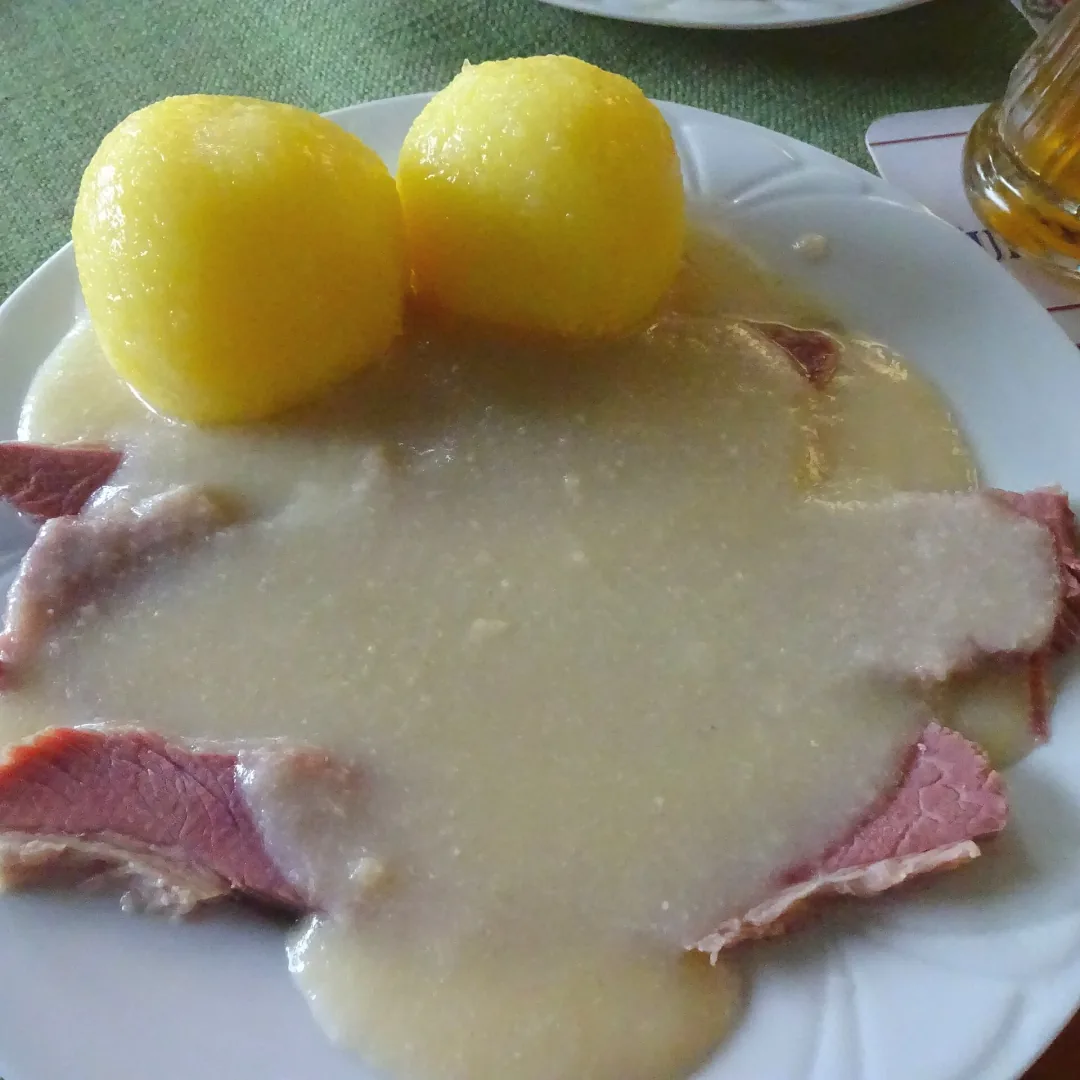
If Krenfleisch is a reason for attending, look for a meal time in the current programme or on the innkeeper’s menu. The word Kärwa does not guarantee the dish.
Roasts, Schäufele and chicken
Schäufele, roast pork and other roasts need long cooking and often appear as lunch or Sunday meals. Potato dumpling, gravy and cabbage are common accompaniments, not one compulsory combination. Roast chicken, steaks and grilled meat are more characteristic of a tent or sales stall.

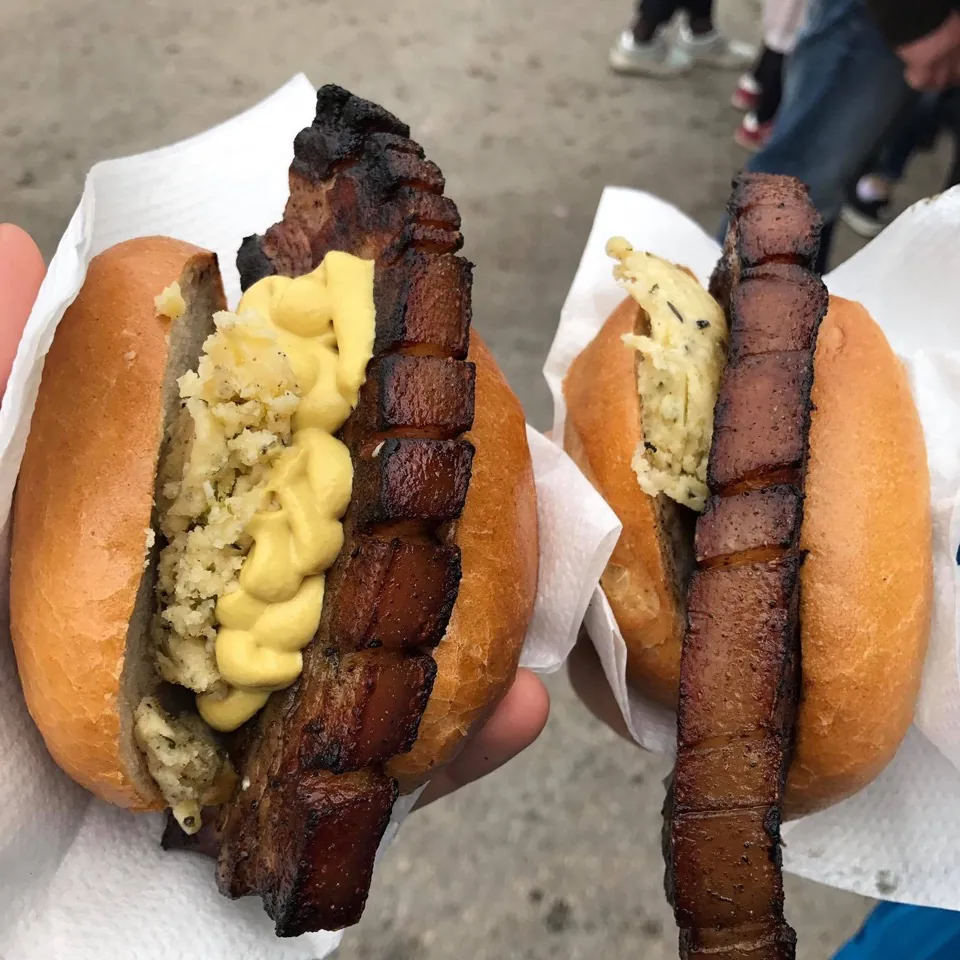
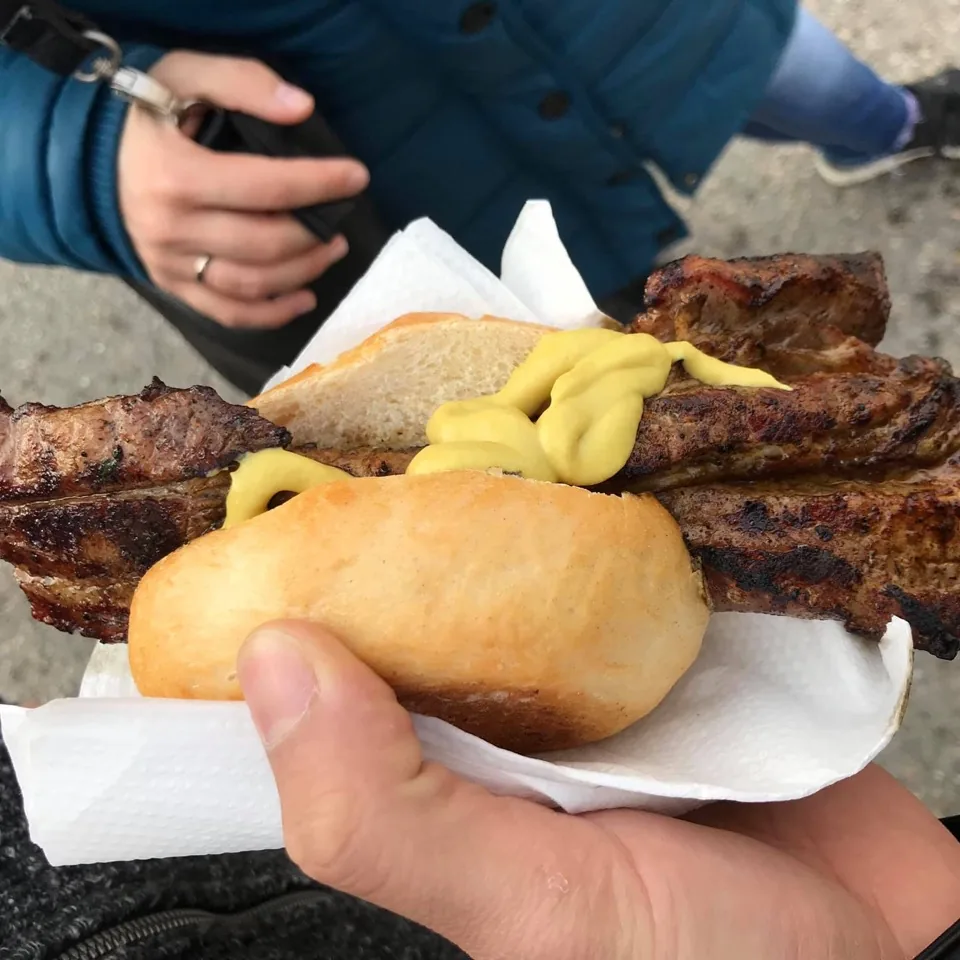
A multi-day event can have a different food offer each day. A late-evening visitor may find only the quick menu even when roasts were served at lunchtime.
Brotzeit and vegetarian choices
Brotzeit fits an inn or beer cellar and can contain sausage, Pressack, cheese, bread and pickled accompaniments. Cheese or a spread is not automatically suitable for every vegetarian diet; rennet, gelatine and cross-contact may matter. Chips, pretzels or a cheese sandwich are possible rather than guaranteed alternatives.

Vegan food and serious allergies should be discussed with the actual provider in advance. Small village events may be willing to help but do not necessarily have written allergen information at every stall.
Küchla with coffee
Küchla, Knieküchla and Ausgezogene are regional names for related forms of stretched yeast pastry. A thinner centre and thicker rim are characteristic; exact form and name change locally. They are fried fresh and served with sugar.
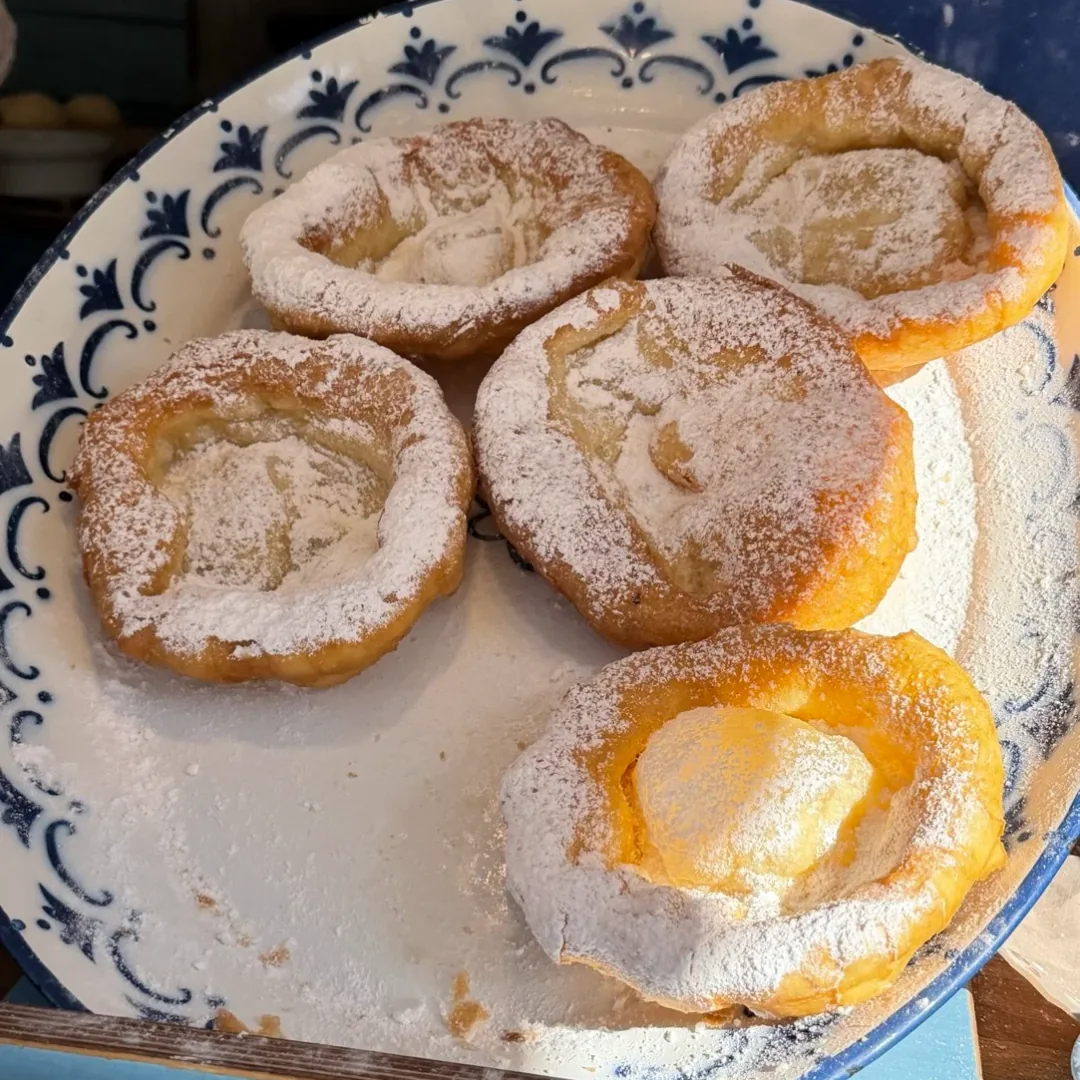
The pastry commonly belongs to the afternoon, a cake counter or selected festival days. Someone arriving late at night should not assume that Küchla will remain available.
Order by place and time
| Place | Likely offer | Useful question |
|---|---|---|
| Inn | roasts, Krenfleisch, Brotzeit | Which dishes are served today? |
| Club tent | hot daily meal, grill, cake | When does food service begin and end? |
| Festival tent | larger menu, chicken, roasts | Is a reservation or table service needed? |
| Individual stall | bratwurst, snack or sweets | Which ingredients and allergens are present? |
A sensible first round is simple: see which kitchen is actually operating, order a local speciality it can serve well that day, and add Küchla or cake later. The meal then follows the event rather than an invented universal Kärwa menu.